• Home
  • Company
    • What we did
    • The People
    • Press
    • Around Us
  • Approach
  • Products
    • Mutual Funds
      • Pharus Asian Value Niche
      • Safe Capital Electric Mobility Value Niche
      • NEF Ethical Global Trends
      • NEF Ethical Step to Balanced 2030
      • NJ Japanese Orphan Companies
      • NJ Korea Reunification
      • NJ Indonesian Infrastructure Small Caps
  • SDG
    • SDG in words
    • SDG in videos
    • Global Compact
    • Fairr
    • SDG Events
    • SDG Academy
    • SDG Analysis
  • NicheJungle
  • Contact Us
  • Newsletter
  • English
    • Italiano
    • English
  • Home
  • Company
    • What we did
    • The People
    • Press
    • Around Us
  • Approach
  • Products
    • Mutual Funds
      • Pharus Asian Value Niche
      • Safe Capital Electric Mobility Value Niche
      • NEF Ethical Global Trends
      • NEF Ethical Step to Balanced 2030
      • NJ Japanese Orphan Companies
      • NJ Korea Reunification
      • NJ Indonesian Infrastructure Small Caps
  • SDG
    • SDG in words
    • SDG in videos
    • Global Compact
    • Fairr
    • SDG Events
    • SDG Academy
    • SDG Analysis
  • NicheJungle
  • Contact Us
  • Newsletter
  • English
    • Italiano
    • English


  • Niche AM Newsletter

    • The Grey Discount — Chapter I
      September 2, 2026
    • No meat’s land
      July 15, 2026
    • When a bubble bursts, not everything bursts
      June 24, 2026
    • The ugly duckling of Asia
      June 3, 2026
    • Do Emerging Markets still provide diversification?
      May 19, 2026


11
Mar
2025
Indonesia: a red flag o a buying opportunity?
Posted On March 11, 2025  By admin  And has 1 Comment

The Indonesian market has lately been under significant downward pressure, with the MSCI Indonesia down in € about 15% since the beginning of the year, and about 28% from its September highs.

For us, this weakness represents a buying opportunity.

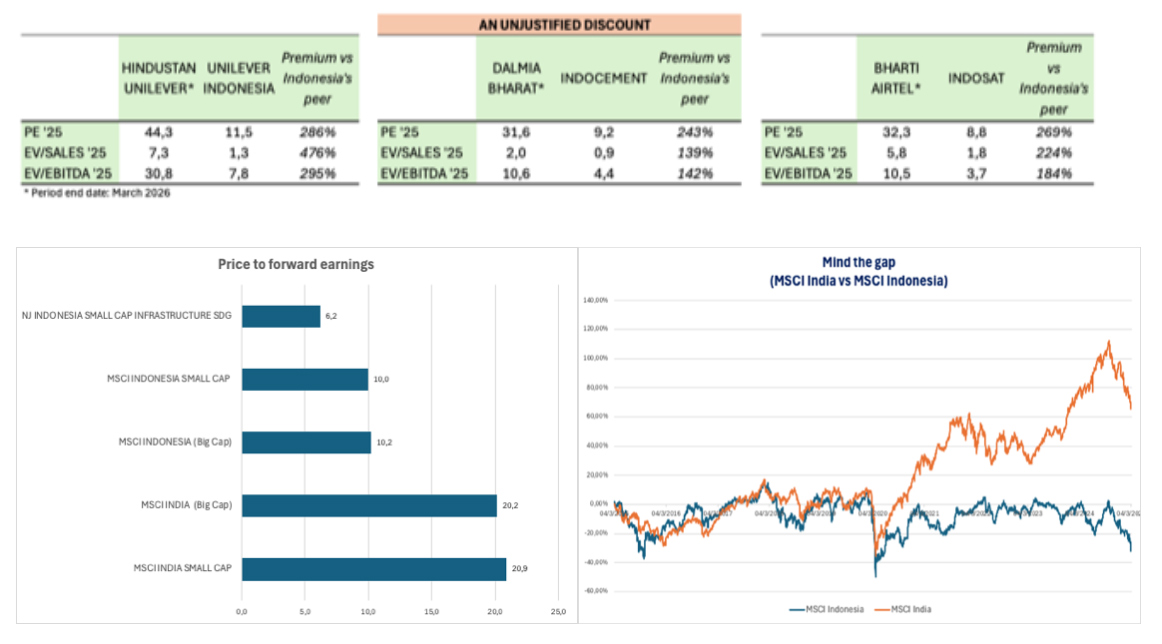
Despite short-term volatility, Indonesia remains an economy with strong fundamentals and robust long-term growth prospects. The current correction has pushed equity valuations to irrationally low levels, further enhancing Indonesia’s attractiveness relative to other emerging markets like India, which continue to trade at significantly higher valuations. Indonesia’s small caps remain particularly attractive. Historically, when markets like Indonesia recover, they tend to deliver extraordinary returns.

We recognize that investors exposed to Indonesia may feel significant stress during phases like these, and we empathize with these concerns. However, for those with the ability to increase their exposure, we strongly advocate doing so. We are actively adding to our equity positions in NicheJungle Indonesian Infrastructure Small Caps SDG, reducing our cash balance in the fund, as we believe the risk/reward profile is highly compelling. This market is quite primitive, and extreme swings either side are often recovered quickly, offering good opportunities.


Factors Behind the Market Weakness & Our Perspective
  1. Over-Discounting of Potential U.S. Tariffs
  2. Investor sentiment has been weighed down by concerns over potential U.S. tariffs under Trump’s new administration. However, while tariffs remain a possibility, the market may be overestimating the risk for Indonesia. Even in a worst-case scenario, where tariffs significantly reduce exports to the U.S., the macroeconomic impact would likely be limited: Indonesia’s exports to the U.S. account for just 7.8% of total exports and 1.7% of GDP, meaning that while certain industries may face pressure, the broader economy would remain resilient. Additionally, Indonesia could redirect trade flows to China and other regional partners, mitigating potential downside risks. Finally, Indonesia’s geopolitical and strategic importance gives the U.S. strong incentives to maintain favourable relations, rather than risk pushing the country closer to its Nr 1 rival, i.e.: China.

  3. Global Market Volatility & Currency Depreciation
  4. The unpredictable nature of Trump-era policies has introduced substantial volatility across global equity markets. Emerging markets like Indonesia are particularly vulnerable to these fluctuations, leading to heightened short-term instability. For European-based investors, additional complexity arises from the performance of the Indonesian Rupiah. Bank Indonesia’s recent interest rate cut to 5.75% aims to stimulate economic growth but has also contributed to Rupiah depreciation against a strengthening U.S. dollar. While currency volatility can impact returns in the short term, it does not alter the long-term growth potential of Indonesia’s economy. The Rupiah is well supported by adequate foreign currency reserves, an independent central bank, low inflation and high real interest rates.

  5. Political Uncertainty Under the New Prabowo Administration
  6. The recent inauguration of President Prabowo has injected a degree of political uncertainty, as markets often adopt a cautious, wait-and-see stance during leadership transitions. Adding to this, his introduction of a “DOGE-like” program—aimed at reallocating resources from lower- to higher-priority political objectives — has contributed to further policy ambiguity. Prabowo’s ambitious goal of achieving 8% annual GDP growth over the next five years has also fuelled skepticism, particularly as Bank Indonesia has revised its 2025 growth forecast to a more conservative 4.7%–5.5%. This potential disconnect between expectations and reality may have disappointed some investors in the short term, but it does not detract from Indonesia’s long-term potential.

  7. Revised Economic Growth Projections
  8. While Bank Indonesia has adjusted its growth estimates, the economy is still projected to expand by approximately 5% in 2025, with inflation expected to remain contained at around 1.6%. These figures indicate a stable economic environment, despite external pressures. Investors should view these adjustments as part of the natural economic cycle rather than as indicators of fundamental weakness.


The valuation case

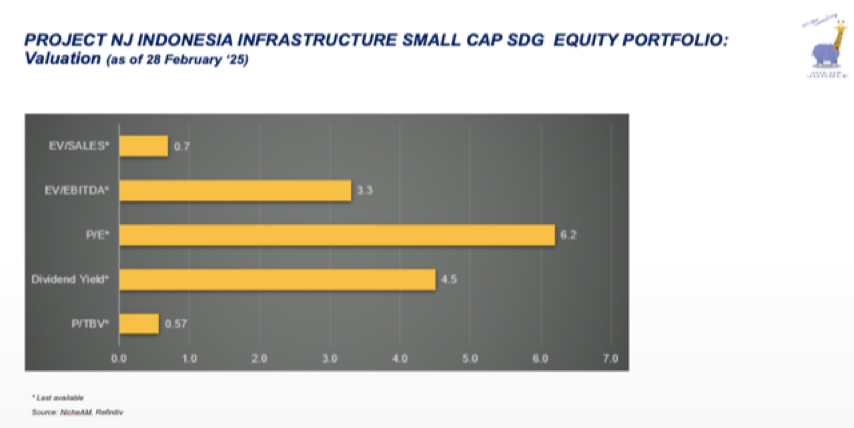
The Indonesian stock market continues to trade at a significant discount compared to India, creating an attractive risk-return profile for investors seeking exposure to emerging markets with solid fundamentals. For example, high quality companies such as Unilever Indonesia, Indocement (controlled by Heidelberg), and Indosat are currently trading at deeply discounted valuations, both in absolute terms and relative to their Indian peers – see the table below. Once considered big cap stocks, we are now purchasing them in our Indonesian Infrastructure Small Caps fund — a clear signal of how quality assets are absurdly undervalued in the current Indonesian market context.


Emerging Markets as a Diversification Strategy

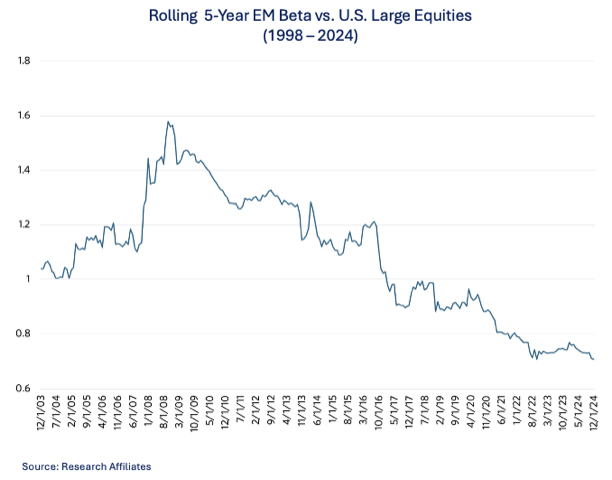
Investing in Indonesia provides significant diversification benefits, particularly in the context of an expensive and concentrated U.S. equity market. Contrary to conventional wisdom, emerging markets like Indonesia do not exhibit beta coefficients consistently above 1 relative to the U.S. market. As a result, they are less correlated with major global indices and can help reduce overall portfolio volatility.


Conclusion

The recent decline in the Indonesian market is primarily driven by external factors and short-term uncertainties. However, strong economic fundamentals, attractive valuations, and long-term growth prospects make Indonesia an appealing investment opportunity for those looking to diversify their portfolio and capitalize on the potential of emerging markets.

Periods of market stress often present the best buying opportunities. For those who can withstand short-term volatility, increasing exposure to Indonesia at current levels could lead to significant long-term returns. As portfolio managers, we are actively increasing our equity positions in Indonesia, confident that, in the end, the market will reward patience, conviction, discipline, and diversification.


Follow us on LinkedIn

This is a marketing communication intended exclusively for institutional investors.

Please consult the Fund Prospectuses and KIDs before making any investment decisions.


Back
Read More

11
Dec
2024
A Park or Tejero Moment for South Korea
Posted On December 11, 2024  By admin  And has No Comment

In 1972, South Korea’s President Park Chung Hee declared martial law after carrying out a self-coup, ushering in 15 years of authoritarian rule.  During this period dissent was suppressed, and media and expressions of art were completely controlled.

Fast forward a few years to February 1981, approximately 10,000 kilometres away, Lieutenant Colonel Antonio Tejero (pictured above) led an armed assault on Spain’s Congress of Deputies during a parliamentary session to elect a new prime minister.  Unlike Park, Tejero’s coup attempt failed.  Spain’s King Juan Carlos I decisively backed the democratic government, ordering the military to stand down.  This pivotal moment solidified Spain’s commitment to democracy and paved the way for significant modernization, including robust economic growth under the Socialist Party’s leadership.


Which Scenario Fits South Korea Today?

Could South Korea’s current crisis resemble Park’s successful or Tejero’s failed attempt to derail democracy?

The unfolding events suggest a scenario much closer to the latter.

Recent reports indicate that President Yoon’s attempted coup was not merely a whim of an eccentric leader and a small, loony circle.  Instead, it reflects the nostalgic sentiment towards authoritarianism of part of the conservative party, particularly the older generation (a minority, not only among the population but also among the conservative party, as clearly demonstrated by the bipartisan vote to lift the martial law during last week’s dramatic hours).

The coup’s key accomplices have been arrested, and while President Yoon remains for the moment formally in charge, his prerogatives have been transferred to his party.  Parliament is set to vote another impeachment motion on Saturday, with signs suggesting the motion could secure the required majority this second time.


The Path Forward

According to the Korea Times (see here ) should this second impeachment motion pass, President Yoon’s powers would be temporarily held by Prime Minister Han and new presidential elections would likely occur within a few months.

In this scenario, the centre-left (Democratic Party) would control the Presidency, the Parliament, and the Constitutional Court, and this would lead to:

  1. Stability and Governability:

    The political gridlock between President Yoon’s PPP and a Democratic Party-controlled Parliament would end, restoring a sense of normalcy. A new Constitution could be approved, providing a more modern and less divisive political governance for the nation.

  2. Improved Relations with North Korea:

    A less confrontational approach could replace the current administration’s hardline stance, fostering opportunities for dialogue and potential rapprochement.

Such political stability could represent a turning point for South Korea’s underperforming domestic market, particularly for sectors and companies sensitive to North-South relations and increased domestic demand.


Conclusion

While uncertainty and fear dominate the current atmosphere, opportunities often lie in such moments of flux.  As Warren Buffett famously advised, “Be fearful when others are greedy and greedy when others are fearful.” With South Korea potentially on the cusp of significant political and economic transformation, investors would do well to pay close attention to how these events unfold.

Follow us on LinkedIn

This is a marketing communication intended exclusively for institutional investors. Refer to the Fund Prospectus & KID before making any investment decision.


Back Read More

29
Nov
2024
Make Indonesia Great Again
Posted On November 29, 2024  By admin  And has No Comment

Embraced now by none other than the world’s most developed economy, i.e. the United States, import substitution used to be the development strategy of choice for many lower-income emerging economies across Latin America, Asia and Africa.

The approach aimed at reducing reliance on imported goods, thus boosting domestic production, creating jobs, building know-how, preserving currency reserves and securing economic sovereignty.

Indonesia is no stranger to this strategy.

Since the election of President Jokowi Widodo in 2014, and now under President Prabowo Subianto, the country has steadily pursued this path with renewed determination.

We don’t need no education. We want manufacturing

Consistent with this approach, this week Indonesia’s Government has rejected Apple’s offer to invest about US$100m in “Apple Academies” – aimed at training local talent – in order to lift the sales ban on the iPhone 16 imposed by the Ministry of Industry (see here).

Why? Indonesia requires all electronic devices with cellular connectivity to include at least 35% of locally produced components, a policy designed to spur the growth of the domestic high-tech manufacturing sector.

Industry Minister Agus Gumiwang Kartasasmita has summed it up well: “We recommend Apple consider developing manufacturing facilities in Indonesia.” He emphasized that Apple’s proposal fell short compared to contributions from other smartphone brands already manufacturing in the country, particularly in terms of added value, tax revenue, and job creation.

So what? The bigger picture

Import substitution is part of a broader Government strategy, which includes also Indonesia’s push for “downstreaming” in the commodity sector, and attempts to take advantage of the gradual reconfiguration (or “re-shoring”) of Western supply chains away from China.

These drivers should position Indonesia as prime destination for inward foreign direct investment (FDI), which is one of the reasons why we are optimistic about Indonesia (especially about undervalued small & mid-caps exposed to the Government’s massive infrastructure development programme). See here if interested in our investment case.

Follow us on LinkedIn

This is a marketing communication intended exclusively for institutional investors. Refer to the Fund Prospectus & KID before making any investment decision.


Back Read More

20
Nov
2024
Can we measure the Impact of Engagement?
Posted On November 20, 2024  By admin  And has No Comment

Can we measure the impact of engagement? What approach does NEF Ethical Global Trends fund take?

The NEF Ethical Global Trends fund is a sustainable fund compliant with Article 9 of the SFDR regulation.

It adopts a systematic approach to minimize the portfolio’s negative impact, aligning with the sustainable mission and territorial ethos of the 65 banks within the Italian Cooperative Banking Group and its parent company, Gruppo Cassa Centrale, which, together with Nord Est Asset Management, has also developed the product.

To achieve this goal, the fund employs several strategies:

  • Investing exclusively in companies with robust governance, environmental, and social risk management procedures—procedures tailored to the company’s resources, geographic context, and industry (ESG analysis).
  • Investing exclusively in companies that contribute to achieving the United Nations’ Sustainable Development Goals (SDGs).
  • Excluding sectors that are clearly incompatible with sustainability objectives, such as tobacco and fossil fuels (controversial sector analysis).
  • Ensuring that invested companies improve year by year in key PAI indicators, which measure their environmental and social impact (DNSH analysis).
  • Ensuring compliance with human and social rights by portfolio companies (Minimum Safeguard Analysis).
  • Examining corporate controversies to ensure that invested companies adopt effective procedures to anticipate and resolve potential violations of sustainability goals (controversy analysis).

If the DNSH analysis reveals a lack of progress toward sustainability, a direct dialogue is initiated with the companies involved to understand the causes and encourage tangible improvements. This interaction process is known as engagement.

But how impactful is this engagement activity? In other words, what effect does the fund’s engagement have on the sustainability metrics of these companies, year after year?

To answer this question, a new proprietary analysis has been developed: the Engagement Impact Report. This annual analysis measures the impact of engagement on PAI indicators, both in terms of improving these metrics and increasing transparency (i.e., the publication of these metrics, which is not yet mandatory).

See here for the 2023 report, which shows the impact of engagement in 2023 vs 2022.

Follow us on LinkedIn

This is a communication for institutional investors. Read prospectus and KID before making any investment decision.


Back Read More

31
Oct
2024
EVs are just going to win
Posted On October 31, 2024  By admin  And has No Comment

At the beginning of this year, the headlines were all about a supposed slowdown in electric vehicle sales. EV sceptics — and there are plenty of them — claimed EVs were just a passing fad, that EV issues were insurmountable and that they’d never thrive without subsidies. The “EV revolution” was supposedly dead.

Fast forward a few months, and that narrative has crumbled. In fact, the writing is now on the wall: EVs are simply a much superior technology and will eventually replace internal combustion engines – as the always insightful Noah Smith points outs here.

We have been thinking the same for over a decade now. And that’s why our PMs have launched the first ever electric mobility fund in the world back in 2015.

Today, at Niche AM, they continue to manage a flexible electric mobility fund that provides exposure to the entire EV battery ecosystem, seeking to identify e-mobility players not yet recognised as such by the market, and betting on a potential re-rating.

Niche AM’s Electric Mobility Value Niche invests thus in this growth theme with a value approach, which helps avoid bubbles while reducing volatility and downside risk.

For further details on our unique Electric Mobility fund see here.

Follow us on LinkedIn

This is a marketing communication intended exclusively for institutional investors. Refer to the Fund Prospectus & KID before making any investment decision.


Back Read More

10
Oct
2024
South Korea makes it to WGBI
Posted On October 10, 2024  By admin  And has No Comment

This week, FTSE Russell announced the results of its semi-annual bond index review, and the big news are that South Korea will be included in the index provider’s flagship World Government Bond Index. See here.

This is a big deal for bond markets, probably the most widely used global government bond index, followed by an estimated US$2.5tn. According to Goldman, the inclusion should attract ∼$65bn into South Korea’s govvies, driving yields lower.

Why should we care about this as investors in South Korean equities?

For 2 reasons. Firstly, because of the benefits on the wider economy and corporates from easier financing conditions and lower yields. Secondly, and of much greater importance, because FTSE Russell’s inclusion may signal a future move by MSCI to do something similar in equities, i.e. including South Korean equites into its Developed Market Indices (something which FTSE Russell has already done back in 2010).

MSCI’s reclassification could draw ∼US$50bn into South Korean equities, and spark a significant rally.

As noted on the FT, “this might seem like a weird, niche thing only of interest to indexing dorks….but the reality is that benchmarks are increasingly influential in deciding global capital flows, and their importance is only going to grow”.

We view MSCI’s potential reclassification as a pivotal catalyst for South Korean equities.

Clearly this is not the only, nor the most important reason to buy South Korean equities.

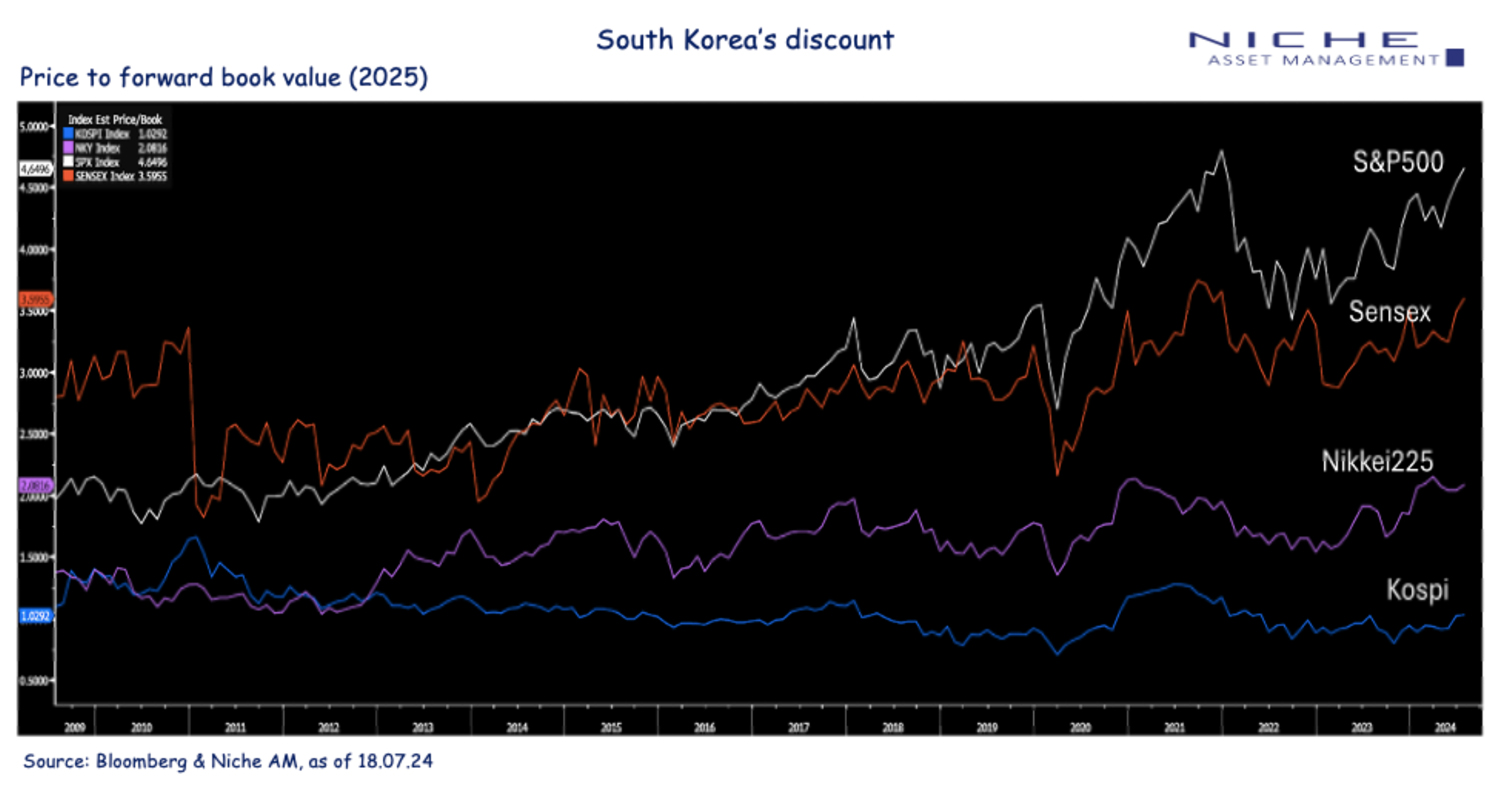
As value investors we are mainly attracted to this market for its exceptionally low valuation and discount vs other major markets, with the KOSPI currently trading at 8.5x 2024 EPS and even below book value, vs the ∼2x book value of the NIKKEI, the ∼3.7x of the SENSEX & the almost 5x of the S & P 500. Our South Korean portfolio is even cheaper, trading at an average of ∼6x EPS despite being composed of good quality corporates with relatively low or no debt.

South Korea offers an interesting alternative to the Chinese and Indian stock markets, which trade at much punchier 12x and 24x EPS respectively. Relative to China’s, then, you get these extremely attractive stocks without all the risks associated with its big neighbour, such as regulatory uncertainty, deglobalisation, friend-shoring, Taiwan, a real estate bubble and a financially stressed system.

Unlike the KOSPI, in our portfolios we give significant exposure to companies exposed to the domestic mkt, particularly in the infrastructure and consumer sectors. We reckon these sectors would benefit the most from potential reforms in North Korea along the lines, for example, of what has happened in China or Vietnam in the last 20 years, which could or could not, in the very long term, lead to the reunification of the country. This would represent a significant opportunity for South Korean domestic equities, to which the market is currently assigning a probability close to zero.

Follow us on LinkedIn

This is a marketing communication intended exclusively for institutional investors. Refer to the Fund Prospectus & KID before making any investment decision.


Back Read More

22
Jul
2024
Developed or still emerging?
Posted On July 22, 2024  By admin  And has No Comment

According to Nobel Prize-winning economist Simon Kuznets, countries can be categorized into four types: developed, undeveloped, Japan and Argentina. Perhaps he should have added a fifth type: South Korea.

South Korea boasts the 14th largest economy globally and ranks in the top decile worldwide for GDP per capita. It’s a member of the OECD since 1996, while the IMF has classified it as an advanced economy already in 1997. Its stock market is the 12th-biggest globally, with a capitalisation of about $1.8trn, ahead of the likes of Italy and even Switzerland. The country leads the world in R&D investment relative to GDP. The West heavily depends on South Korea for semiconductors, smart phones and smart TVs, while greatly enjoys its pop music, films and food.

Since the 1980s, the country has also transitioned into a modern Western-like democracy, curbing corruption and limiting the economic and political dominance of chaebols.

And yet, despite possessing nearly all the hallmarks of a developed market, MSCI has once again, back in June, reclassified South Korea as an “emerging market”. Click on image below for details.

MSCI is primarily concerned about the convertibility of the Korean won in the currency market and is also unhappy with the full ban on short selling reintroduced in November 2023.

MSCI’s classification as emerging market probably contributes to what is known as the South Korea "discount" – a term describing the underperformance/undervaluation of local stocks compared to other global equity benchmarks.

A discount which is probably also the result of other factors, such as an exaggerated perception of the military threat from North Korea (are investors not investing in German stocks due to its proximity to Russia?); poor corporate governance within South Korean conglomerates; and the inaccessibility of South Korean stocks for non-domestic retail investors.

While we can't predict when (or even if) MSCI will upgrade South Korea to "developed market" status, it's worth noting a couple of things.

First, the country is already, albeit gradually, easing restrictions on the currency market (where the heavy regulatory focus reflects the comprehensible hyper-vigilant mindset forged in the wake of the capital flight and won collapse witnessed during the Asian Financial Crisis of 1997).

Second, while inclusion in MSCI’s Developed Market index is estimated by Goldman Sachs to potentially lure some US$46bn-56bn of fresh capital into South Korean assets, an investment case for South Korea doesn't need to hinge on MSCI's reclassification.

As value investors, our investment case for South Korea is primarily based on valuation.

As of today, approximately 29% of the Korean listed market trades below tangible asset value. This percentage increases to around 65% when considering the number of companies rather than their market weight.

This misvaluation significantly impacts all companies, particularly medium and small caps (which in fact have basically not moved over the past decade).

South Korea offers a compelling alternative to the Chinese stock market. Probably much more compelling than arguably expensive India. Despite China's poor stock performance in recent years, South Korea is trading at about 9.9x 2024 earnings, vs. China’s 11.7x circa (and India’s >23x).

And this lower valuation comes without all the risks related to China, such as policy uncertainty, deglobalization / reshoring / friendshoring, Taiwanese tensions, a real estate bubble, and a stressed financial system.

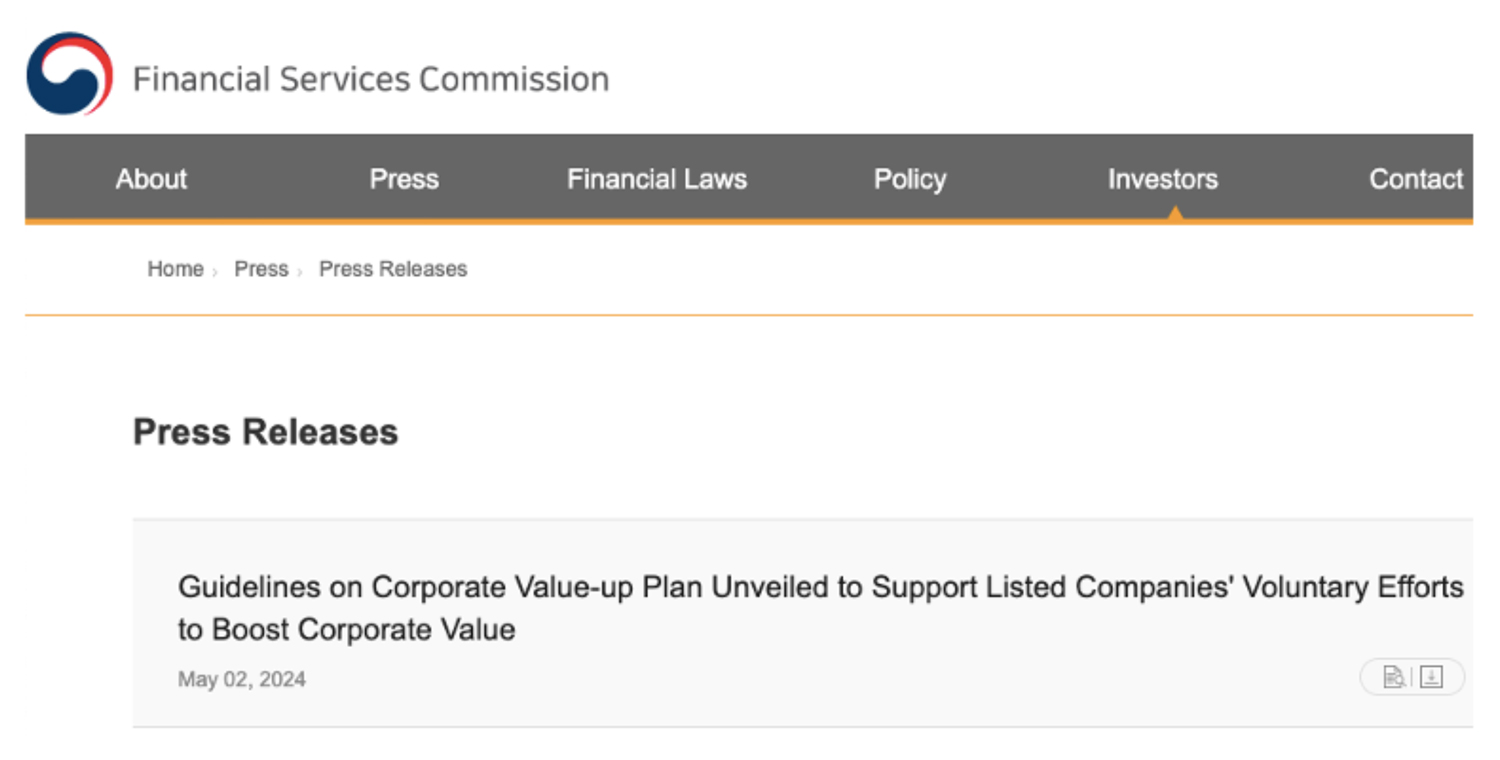
Imminent policy measures should gradually help close the South Korean discount. Last February, the government announced the so-called Value-up Plan, final details of which should be available shortly.

Click on image below for details.

The plan will allegedly offer tax incentives to companies that implement measures to enhance investor communication and governance, with the aim of focusing investor attention on hundreds of undervalued companies.

It appears that participating companies would be able to tax deduct 5% of any increase in shareholder returns (i.e.: dividends and buy-backs) over and above the average of the previous three years. There would also be a reduction in personal tax on dividend increases, from 45% to 25% (or from 14% to 9% for small shareholders).

For Chaebols and family businesses that typically do not distribute dividends, these measures would represent an opportunity to issue extraordinary dividends over the next two years. Even large companies will be motivated by shareholders to increase their currently low payouts.

Companies that join the program and meet the plan’s minimum communication and governance standards, would apparently be included in specific indices and become thus eligible for investment by pension funds and insurance companies.

At Niche AM, we view South Korea’s companies as exceptionally compelling opportunities, both in terms of valuation and business fundamentals.

This is the reason why our NEF Ethical Global Trends SDG fund is significantly overweight South Korea, which represents 11% of the portfolio vs the meagre 1% held by benchmark MSCI ACWI Value. This overweight position sharply contrasts with NEF EGT's minimal 0.13% exposure to China, exposure which the fund has been actively reducing since 2022, when Niche AM adopted the policy of not investing in countries deemed as autocracies by Freedom House.

NEF Ethical Global Trends holds 33 South Korean stocks, trading at an astonishingly low multiple of around 7x earnings (yes, 7x—it’s not a typo) and well below tangible book value.

These companies aren’t just cheap. They are also companies with good ESG profiles, which are making a positive contribution to achieving the UN’s Sustainable Development Goals (consistent with the classification of the fund as an Article 9 SFDR).

And we know this because at Niche AM we conduct rigorous sustainability analyses, both quantitative and qualitative. Once in the portfolio, we ensure that companies demonstrate a consistent improvement in sustainability over time. If a company deviates from its improvement trajectory, we actively engage with management to understand and address that deviation directly. If the deviation is not justified and/or the company does not return onto an improving trajectory within a reasonable time, the stock is sold as soon as allowed by market conditions.

The 33 South Korean names in our NEF EGT portfolio have been carefully selected based on this comprehensive sustainability process. The selection was made from an initial pool of approximately 150 South Korean firms, which themselves were shortlisted from around 2,500 listed companies on the basis of valuation and liquidity.

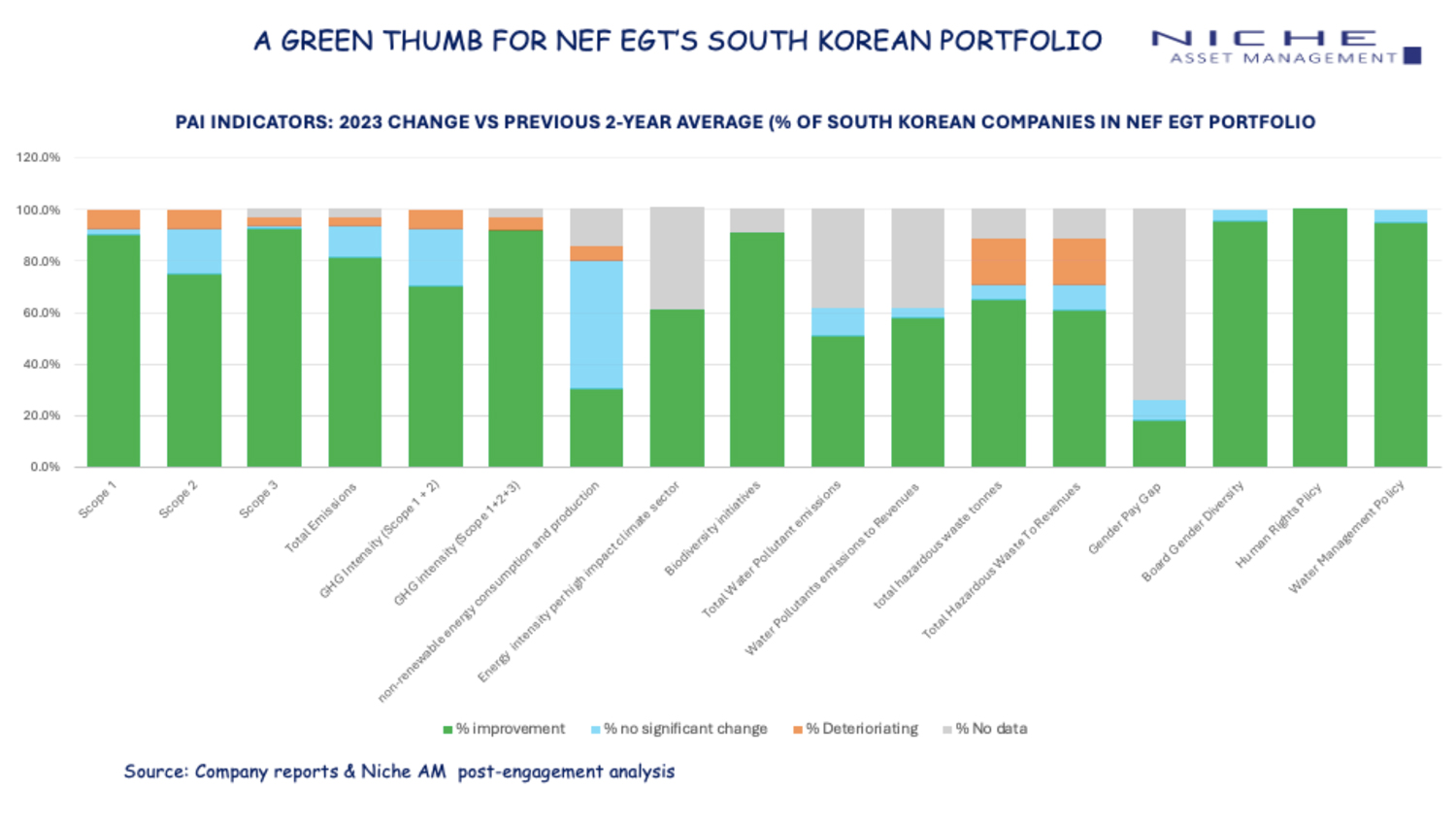
The chart below illustrates the mostly improving sustainability performance and responsiveness of South Korean companies in NEF EGT’s portfolio between 2021 and 2023.

As value investors, we don't wait for "catalysts" before investing, primarily because once a catalyst becomes apparent or obvious, it is often too late to invest.

However, if pressed to identify potential catalysts for South Korean stocks, we would mention the MSCI reclassification discussed above and (probably more impactful in terms of upside potential), any reform in North Korea on the lines, for example, of what took place in China or Vietnam over the last 20 years.

Any change in the northern neighbour represents an opportunity to which the market is currently assigning zero probability, and it would hugely benefit this segment of NEF EGT’s portfolio, predominantly composed of companies deeply integrated into the peninsular economy.

See here for further details on NEF Ethical Global Trends SDG.


Follow us un LinkedIn

This is a marketing communication intended exclusively for institutional investors.
Refer to Fund Prospectuses & KIDs before making any investment decision.

Back Read More

25
Jun
2024
Japanese Secrets
Posted On June 25, 2024  By Marius Iordan  And has No Comment

In Japan, shinise (literally “old shops”) are long-established businesses that have been in operation for at least a hundred years – some even more than a thousand years.

These businesses have endured nuclear wars, earthquakes, tsunamis and depressions, and yet, as explained here by Morgan Housel, they keep going on, generation after generation.

Japan is in fact the country with the biggest number of such old businesses, with their products and services clearly enjoying immense prestige (one of these being for example the household brand-name Nintendo).

What is their secret?  The reasons for their success are probably many, but there is one that could surprise those used to Western-style capitalism: these Japanese companies hold tons of cash, and no (or very low) debt.

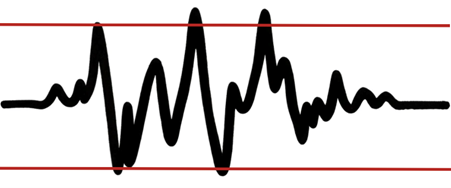
Low leverage certainly helps survival.  As illustrated by Housel, with no debt, the number of events a company can withstand might fall within a range that looks like this:

A few catastrophic events might hurt, but you are likely to survive.

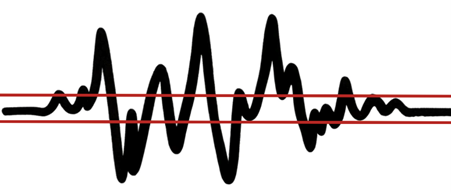
With more and more debt, says Housel, the range of events you can survive shrinks until you are toast:

What’s all this got to do with us?

At Niche AM we run a Japanese fund that invests in what we call “orphan companies”, i.e.: companies not covered by the sell-side and thus significantly undervalued.  But lack of broker coverage is just one of the features of our fund.

As deep value investors, we can’t but appreciate the business approach of shinise.  And consistent with that view, in our portfolio we only hold companies which -like shinise – are net cash positive.  In fact, the companies in our Japanese Orphan Companies fund have roughly, on average, 10% more cash than their market cap:

For further details on our Japanese fund see here.

This is a marketing communication intended exclusively for institutional investors.

Refer to Fund Prospectuses & KIDs before making any investment decision.

For any questions email us on: info@nicheam.com

Follow us on LinkedIn: www.linkedin.com/company/niche-am


Back Read More

11
Jun
2024
Artificial Intelligence & Power
Posted On June 11, 2024  By admin  And has No Comment

Artificial intelligence is getting all the attention from investors and media right now, but if it is to become the most transformative technology of the 2020s it might in part have to depend on batteries to become so.

After all, all successful revolutions need power, and just as the clean energy revolution relies on batteries (for energy storage and transportation), so will artificial intelligence, to some degree.

AI means a lot of different things to different people, but deep down it includes some sort of intelligent machine performing the most disparate functions in the most disparate fields – including medicine, hospitality, household appliances, transportation, military applications, etc etc.

In few words, AI is supposed to give brains to a lot of these machines, but it is batteries that will allow some of these to free themselves, get up or down, and move around. According to this note, this will be the “Decade of the Batteries”.

We couldn’t agree more.

That’s why at Niche AM we have not one, but three different funds which, to a greater or lesser extent, invest in the battery ecosystem.

Both our Electric Mobility and Asian funds invest in EV & battery players which are not recognised as such by the market, and are thus deemed to have significant re-rating potential.

Our Indonesian fund invests instead in a country which is already (and will increasingly become) one of the world’s most important battery hubs. Be it for the availability in Indonesia of key battery minerals nickel and cobalt, the geopolitical “neutrality” of the country in between China and the West, and the Government’s nationalistic strategy to protect and leverage on its natural resources to develop the domestic battery industry, both downstream and mid-stream.

For details see our range of Niche AM funds & NicheJungle funds

This is a marketing communication intended exclusively for institutional investors. Refer to the Fund Prospectus & KID before making any investment decision.

For any questions email us on: info@nicheam.com

Follow us on LinkedIn: www.linkedin.com/company/niche-am


Back Read More

30
May
2024
Not only chips
Posted On May 30, 2024  By admin  And has No Comment

South Korea ain’t only about chips.

When looking at this Far East market, global investors tend to focus on the Samsungs and similar high-tech exporters. Which is clearly not a bad problem to have as an economy. Yet, South Korea is much more than that, with plenty of other sectors which are equally attractive. Or one could say, equally spicy – like noodles and ramen.

Unlike equity investors, the West’s media & entertainment industry has already noticed the potential and the quality of South Korean assets and products ex-tech, and so have consumers across the world. South Korean companies are already benefitting.

For example, Nongshim, South Korea’s leading instant noodle maker, which has announced this week that it is accelerating overseas expansion as its ramen products benefit from the growing popularity of K-pop, South Korean movies (such as Oscar-winning Parasite) and South Korean culture in general, in countries such as the US, Germany and UK. See here.

As niche investors, we scout the whole globe to try and find attractive assets which are unfairly neglected by the market and which offer huge upside potential, both in terms of cash returns and/or multiple re-rating.

South Korea’s domestic-exposed companies are among the most attractive worldwide from both a valuation and business standpoint, and our NJ South Korean fund is the only vehicle which is available to investors for buying their stock. No other funds invest in these companies, many of which are likely to rally strongly once the effects from the real estate crisis wane.

Our fund includes about 125 stock holdings; trades at around 6x earnings (yes, 6x…this is not a typo) and at circa 40% discount to TBV; and it is highly diversified in terms of sectors, with Tech representing only 4% of the portfolio while the 2 biggest sectors in terms of portfolio weight (Consumer Discretionary and Industrials) weigh just 16% each.

The possible (likely?) inclusion of South Korea in the MSCI Developed Markets index could be a catalyst for a significative revaluation of the whole South Korean market.

Some kind of change in North Korea (even minor – along the lines of past reforms in China or Vietnam) provides instead a powerful free option to which today Mr Market is assigning zero probability. Such an event should disproportionally and massively benefit our portfolio, which is mostly composed of firms exposed to the domestic economy.

Spicy broth with a meaty taste and chewy noodles may not be to everyone’s taste, but South Korea should arguably be in all global investors’ menus.

See here for details on our NJ South Korean fund.

This is a marketing communication intended exclusively for institutional investors. Refer to the Fund Prospectus & KID before making any investment decision.

For any questions email us on: info@nicheam.com

Follow us on LinkedIn: www.linkedin.com/company/niche-am


Back Read More


123456789
Page 2 of 9

unglobalcompact fairr

Niche Asset Management ltd is authorised and regulated by the Financial Conduct Authority, FRN 783048
Legal | Cookie Policy