


No meat’s land
The inevitable (and investable) trend towards alternatives to meat
Only a few years ago — propelled in part by a post-Covid appetite for all things healthy and green — eating less meat looked like a powerful new trend, and alternative-meat stocks became an equity-market fashion. A handful of loss-making names IPO’d into euphoria, then deflated almost completely. Today the theme is off the radar — the narrow alternative-meat story and the broader alternative-proteins one alike. We think that is a mistake. The two forces that make a gradual, long-term shift away from meat hard to avoid — the well-established human-health risks of eating a great deal of it, and its outsized burden on the planet — have not weakened; if anything, the evidence has hardened. Over the coming years a third force may drive this shift too: national food-security policy. In the meantime, as with electric vehicles, powerful lobbies and cultural inertia keep the gap between what the science says and what people do irrationally wide and slow — but that gap is precisely where patient, contrarian capital gets paid. Through our No Meat’s Land niche we own profitable, cash-rich, dividend-paying companies across the plant- and seafood-protein supply chain, bought at deep-value multiples while no one is looking.
A theme the market has left for dead
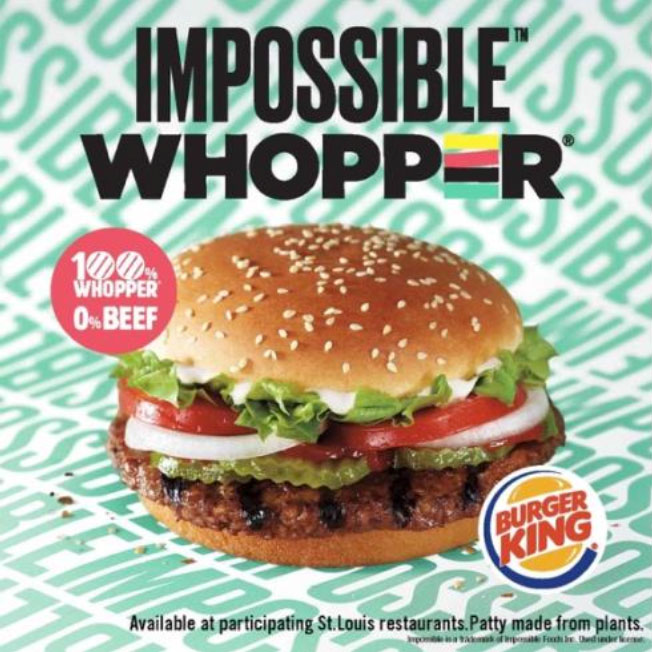
The Impossible Whopper: Burger King’s 2019 plant-based launch, the high-water mark of the first alternative-protein boom.
In 2019 a company called Beyond Meat went public in one of the most successful IPOs since the 2008 financial crisis, valued at close to $4bn. Its shares surged 163% on their first day of trading and quadrupled within months. Burger King put a soy-based patty under the Whopper name, Impossible Foods became the talk of Wall Street, and “alternative protein” briefly turned into a portfolio line item. US plant-based meat sales rose 45% to $1.4bn in 2020 as the category boomed.
Then the cycle turned, hard – especially for the alternative meat products. Beyond Meat’s market value has fallen to well under $400m — a roughly 90% drawdown from its IPO peak. The share of American adults regularly eating plant-based meat has gone nowhere, staying in the single digits.1 Prices do not help: a pound of beef mince at Walmart, America’s biggest grocer, sells for $7.43, against $9.04 for an Impossible alternative — the opposite of the value proposition the category needs.2
Taste and an unflattering “ultra-processed food” label played a part too, as does a culture-war backlash across the world (in the United States, the Health Secretary, Robert F. Kennedy Jr., has toured the country under the slogan “Eat Real Food” and told cattle ranchers something like “the war on beef is over”3).
Yet, the business and investment upside from the wider alternative-proteins theme remains vast: plant-based meat for example remains roughly 1% of the US retail meat market, against a conventional meat industry worth on the order of $1.7 trillion a year.4
None of what follows is an investment case for vegetarianism on moral grounds. It is a case grounded in health, economics, the basic biology of raising animals, geopolitics and, above all, valuation.5
The trend towards alternatives to meat is structural, not a fad
Two drivers carry most of the weight. Both are based on established facts about human health and about the biology of turning crops into animal protein — facts that, over time, are likely to exert a steady downward pressure on how much meat the world produces and consumes.
1. Meat carries well-established health risks
In 2015 the World Health Organization’s International Agency for Research on Cancer reviewed more than 800 studies and concluded that processed meat is a Group 1 carcinogen — the same evidence category as tobacco.6 Red meat is Group 2A, “probably carcinogenic.” Each 50-gram daily portion of processed meat is associated with about an 18% higher risk of cancer — figures reaffirmed in subsequent reviews.7 When meat starts to go off, bacteria break down the muscle tissue and release cadaverine, the compound that gives decaying flesh its characteristic smell. It is more than a marker of spoilage though. In cured and processed meats (such as bacon, ham, salami, hot dogs), cadaverine reacts with the nitrites used as preservatives to form nitrosamines, a family of compounds known to cause cancer.8
Newer evidence adds weight from two different directions. A 2026 study in Nature Medicine followed roughly 100,000 American health professionals from middle age into their seventies: those in the top tenth for red-meat consumption were less likely to reach 70 at all, and those who did were more likely to suffer chronic illness and less likely to be in good cognitive, mental and physical health — a larger effect than for other unhealthy foods in the same study.9
Separately, a randomised-controlled trial — a stronger form of evidence than the observational studies above, since diet is assigned rather than self-reported — found that a diet rich in red meat raised participants’ cholesterol and a heart-disease-linked compound called TMAO compared with a meat-free diet matched for saturated fat.10 Also, higher processed-meat intake is associated with materially higher rates of cardiovascular disease and type-2 diabetes across very large cohorts.11
The current meat production model carries another important cost. Intensive livestock farming is the world’s largest consumer of antibiotics — most estimates put the share of medically important antibiotics given to farm animals at around 70% — much of it used not to treat sick animals but to keep healthy ones alive at high stocking densities. The risk is not only drug residues in the meat, but the bacteria this heavy use of antibiotics could breed: resistant strains that medicine can no longer kill. Antimicrobial resistance is now treated by some governments and institutional investors as a serious long-term threat, and it is already drawing a degree of engagement pressure onto the listed meat majors.12
The point for an investor is not that meat is poison, but that the health costs of consuming a great deal of it are well documented from several independent lines of evidence, and that public awareness of them — and the regulatory pressure that tends to follow it — is far likelier to rise than to fade, creating thus the opportunity for an exploitable structural trend.
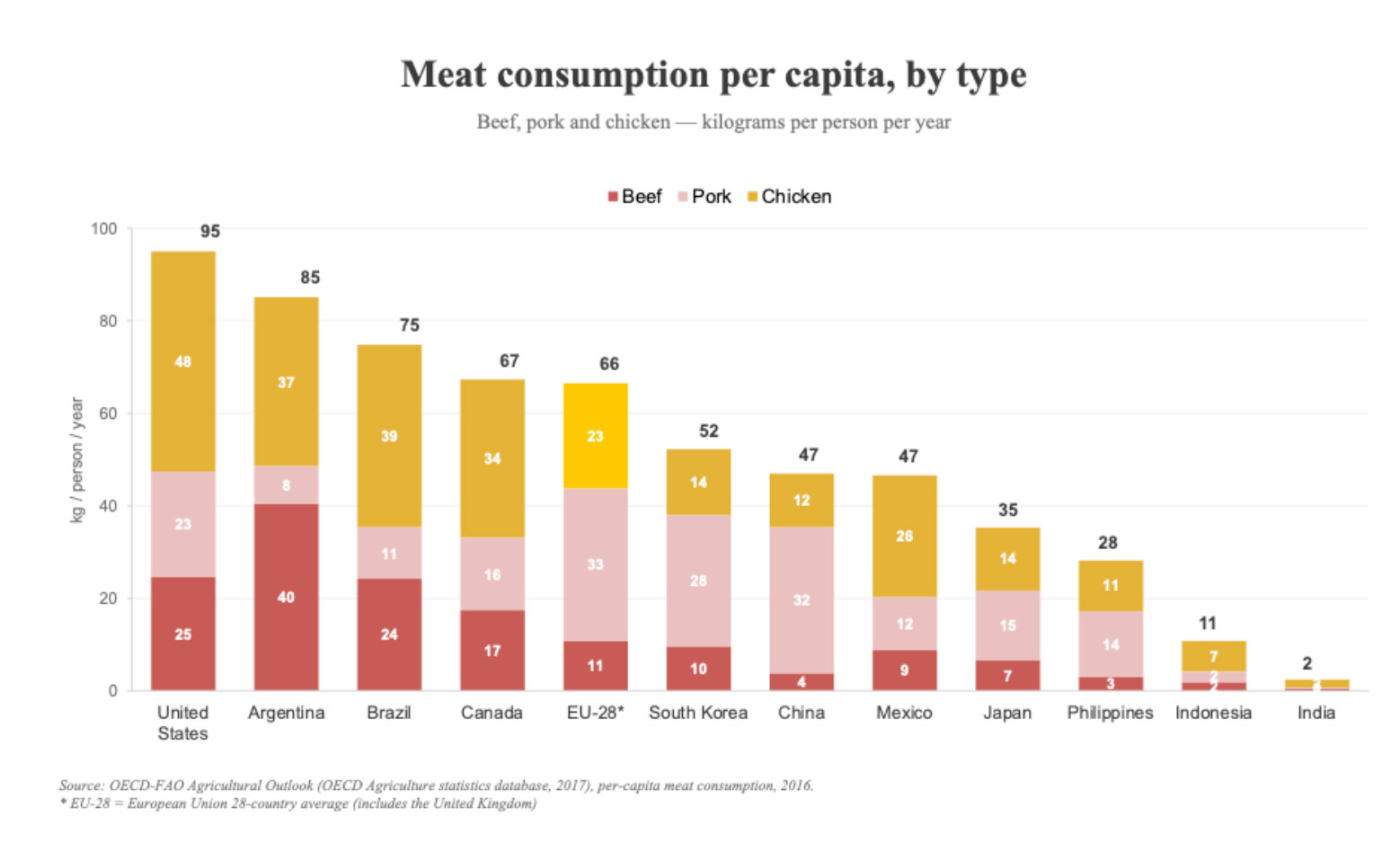
2. Meat is expensive for the planet
As Europe endures another summer in the grip of record-breaking heat, concerns about global warming have returned to the fore. Yet public attention is focused almost entirely on the fossil fuels the world burns for energy; far less is said about the warming caused by the way the world eats.
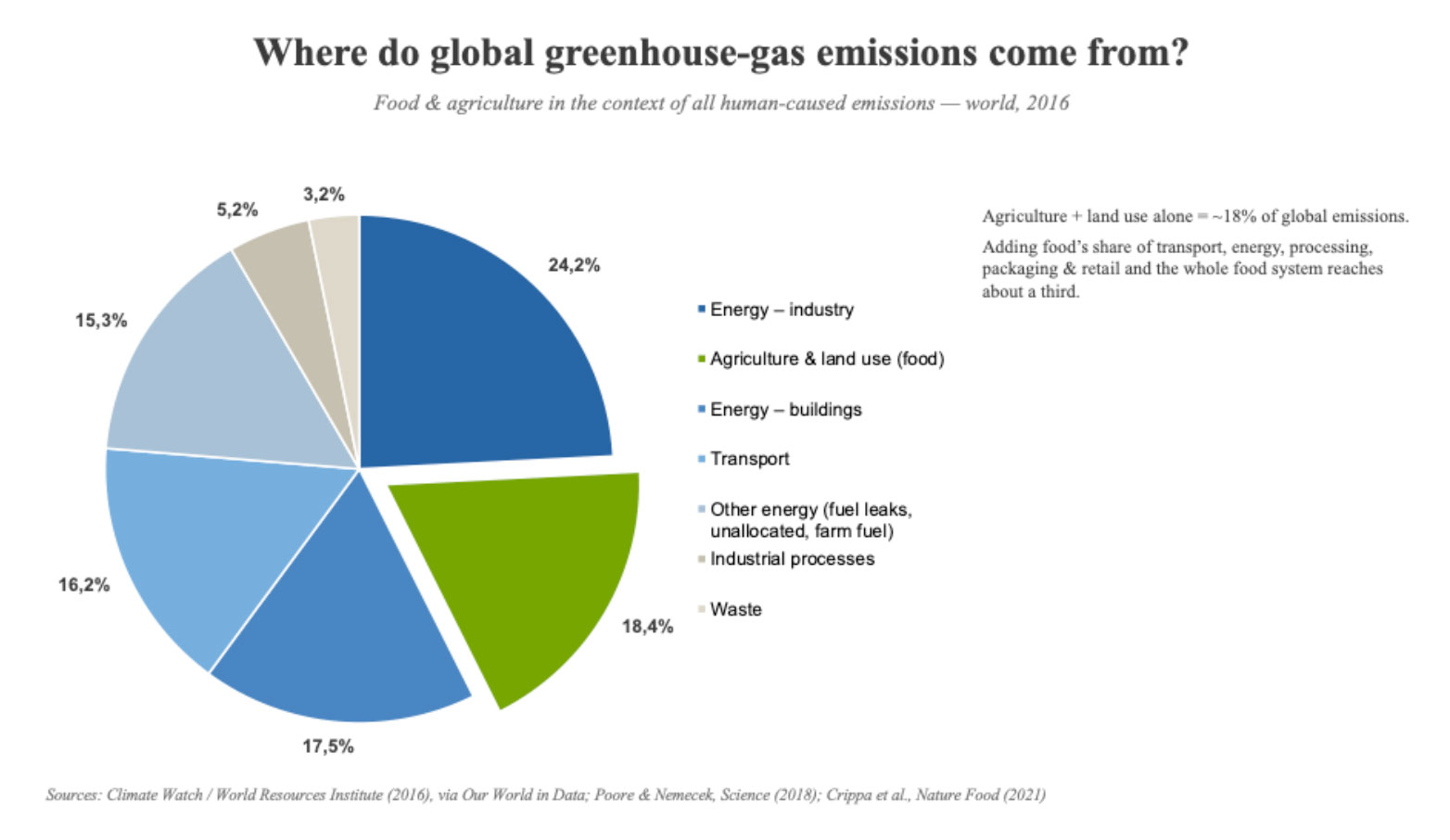
Raising animals for food — the whole chain from growing their feed to the farm gate — accounts for roughly 15%-20% of all human-caused greenhouse-gas emissions, depending on the methodology — the most recent and comprehensive estimate, published in Nature Food, puts it near the top of that range. The broader food system, including land-use and crop agriculture, accounts for roughly a third of global emissions — large enough on its own to threaten the Paris Agreement’s targets of limiting global warming to 1.5°C, and eventually 2°C, even if fossil fuels were phased out entirely.13
The main culprit is cattle and precisely methane, a gas with roughly 28 times the warming power of CO₂ on the standard hundred-year measure (and some 80 times over a twenty-year horizon, which is the timeframe that actually matters for hitting mid-century targets), which cattle produce as they digest and release as flatulence and, overwhelmingly, by belching. A single cow emits on the order of 70 to 120 kilograms of methane a year: in a sense, the world’s herd of cows is, collectively, a very large and inefficient source of useless gas.14
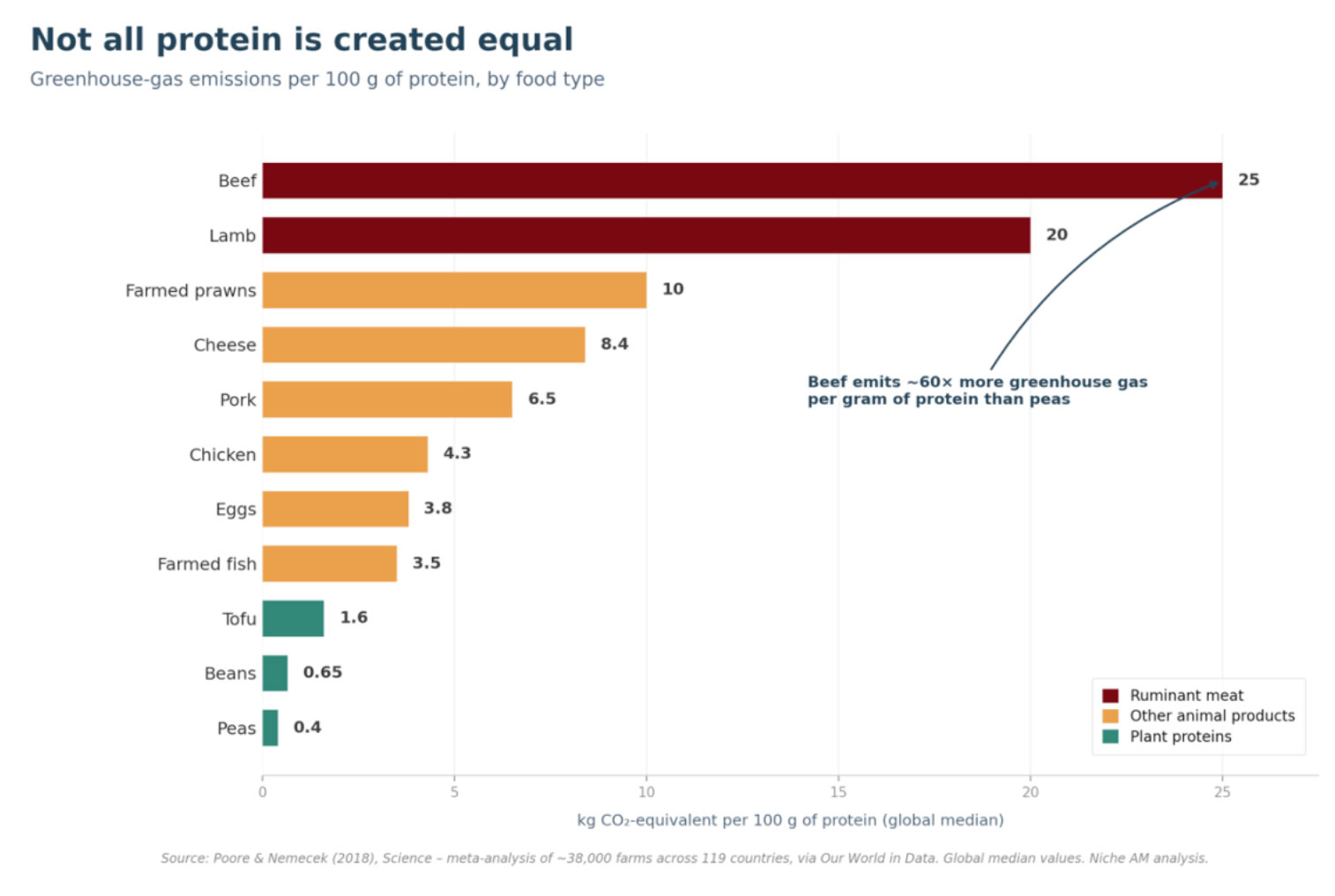
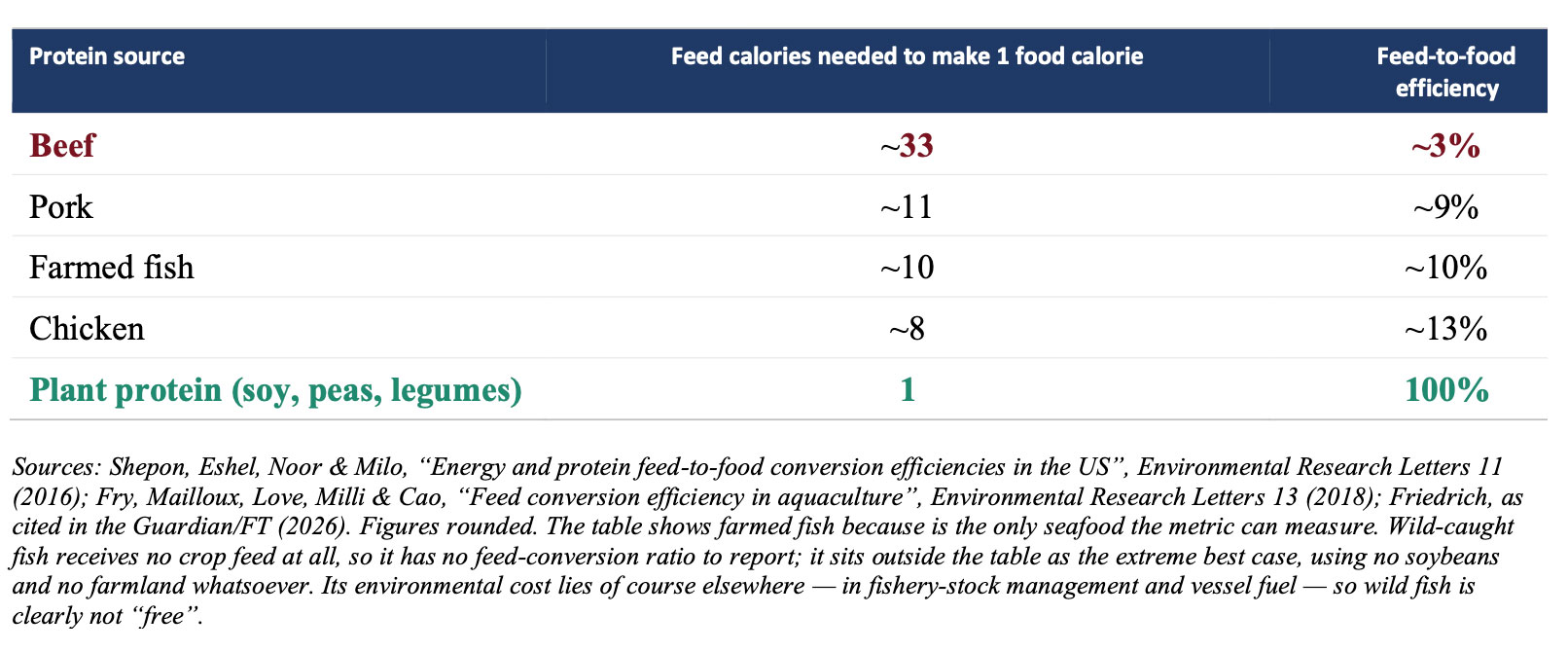
The feed-conversion arithmetic (and economics) — i.e.: how much crop energy it takes to produce a given amount of animal-protein energy — is just as stark. It takes roughly eight calories of crop feed to produce one calorie of chicken, eleven calories for pork, and at least 33 for beef!15
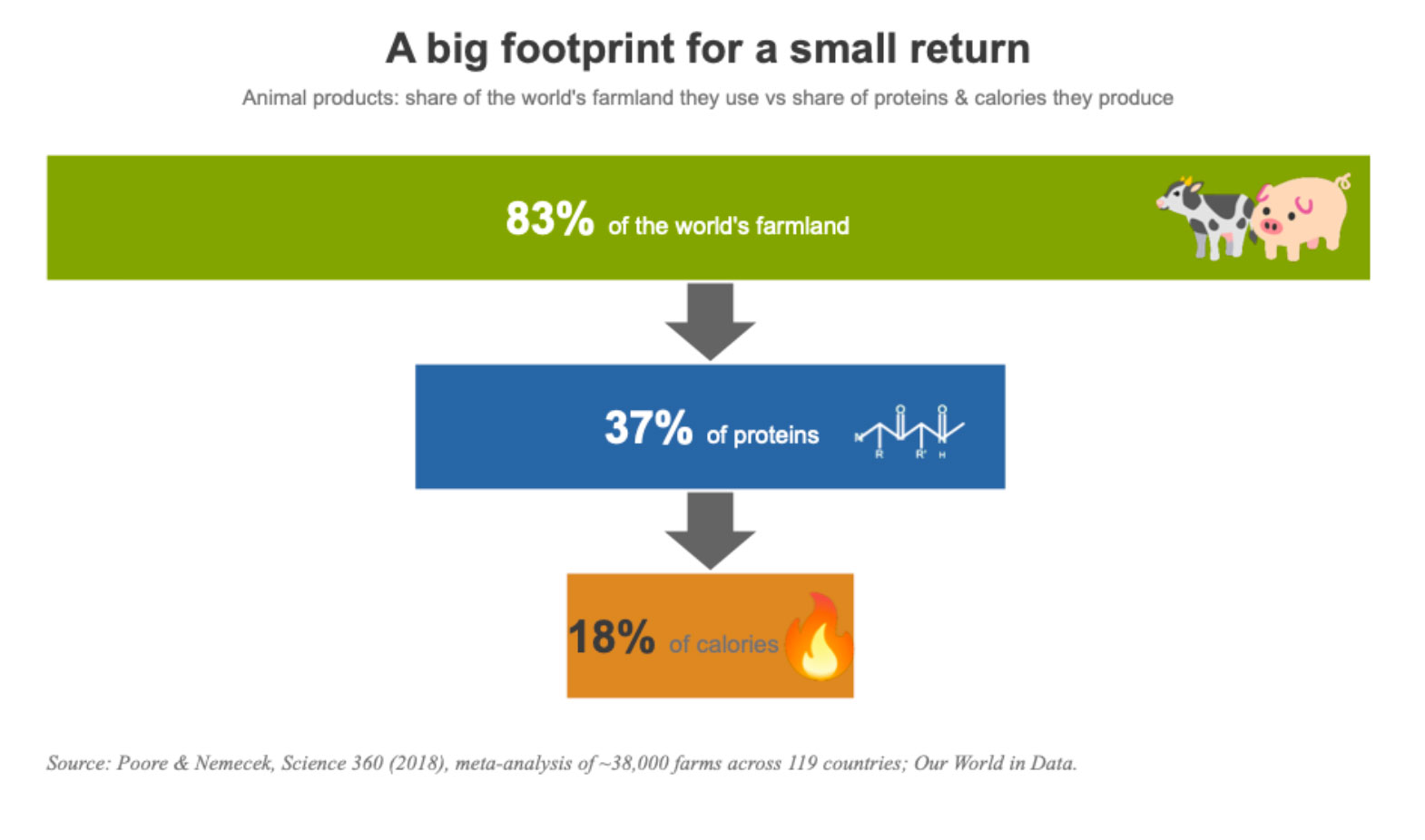
That inefficiency shows up also in land and water use. The largest study ever conducted of global food systems found that animal products occupy about 83% of the world’s farmland while supplying only around 18% of world’s calories and 37% of proteins.16
Water tells a similar story. It is estimated that the water footprint per calorie of beef is about twenty times that of cereals, and, more visually, that a kilogram of beef requires around 15,000 litres of water, against roughly 2,000 for soy (though it is fair to note that most of the beef figure is rainfall falling on pasture rather than water drawn from rivers or aquifers).17
Add deforestation — of which livestock is a leading cause — together with biodiversity/species loss, and the conclusion is not ideological but obvious: the current way of producing protein becomes increasingly hard to scale sustainably as the world grows richer and more populous.
The tobacco and EV parallels
If the science is this settled, why has consumption barely moved? Because settled science and changed behaviour are separated, historically, by decades — and the length of that lag is a function of how hard entrenched interests work to preserve the status quo.
The pattern rhymes with two transitions investors already understand. Tobacco: the link to cancer was established in the 1950s, yet consumption in the West only declined in earnest a generation later, after the cultural and regulatory tide finally turned. The combustion engine: the case for electrification has been clear for years, and yet incumbents, supply chains and habit are stretching the transition for way too long.
Recent academic work documents how parts of the meat-and-dairy sector have borrowed from the tobacco and fossil-fuel “playbook” — funding sympathetic voices, manufacturing doubt around inconvenient findings, and lobbying to keep uncomfortable conclusions out of government policy.18
By 2025, seven US states — Alabama, Florida, Indiana, Mississippi, Montana, Nebraska and Texas — had passed bans on the production, sale or distribution of cultivated meat, several of them explicitly framed as protecting conventional ranchers.19
Europe has moved in the same direction. In the UK, the only cultivated meat cleared for sale so far is for pets, not people: human approval is still working its way through the Food Standards Agency.20 In November 2023 Italy became the first country in the world to ban the production and marketing of cultivated meat outright — a law championed by Giorgia Meloni’s government as a defence of “national culinary heritage”, with fines running up to €150,000; the same law restricted “meaty” terms such as steak and salame on plant-based packaging. Hungary followed in November 2025, banning cultivated meat, and, tellingly, in the same parliamentary session, cutting VAT on beef from 27% to 5%.21
In late 2025 it was the European Parliament to restrict everyday “meaty” words — burger, sausage, steak — from being used on plant-based packaging, despite objections from supermarkets, producers and the EU’s own consumer-research body, whose surveys found shoppers are not in fact confused by a clearly labelled “veggie burger.” A full ban could become EU law within a couple of years, with the UK potentially following via its food-trade alignment with Brussels.22 Nobody mistakes a mince pie for mince, but the episode is a vivid, present-tense illustration of exactly the kind of regulatory friction our tobacco parallel describes.
Nor does the engineered meat’s “ultra-processed food” (UPF) label help. Under the current system, most plant-based meats fall into the same group (UPF) as industrial biscuits or hot dogs — but that classification turns on the degree of processing, not on nutritional content, and peer-reviewed work argues it wrongly lumps together foods with very different health profiles. A soy burger with added vitamin B12 and iron has clearly a better nutritional profile than a traditional pork sausage, yet both fall into the same UPF category. This is the paradox that the meat lobby exploits: since 2019, industry-funded groups have run high-profile campaigns branding plant-based meat as “chemical” and “ultra-processed.”23
Having said all that, in food the lag between science and behaviour could prove shorter than in tobacco or the combustion engine. Today, cheaper and more accessible information — accelerated by the internet and increasingly by artificial intelligence — spreads awareness of the health and environmental costs much faster than in any previous transition.
And a further force could shorten the lag between science and consumer behaviour even more.
Food security: a potential new driver?
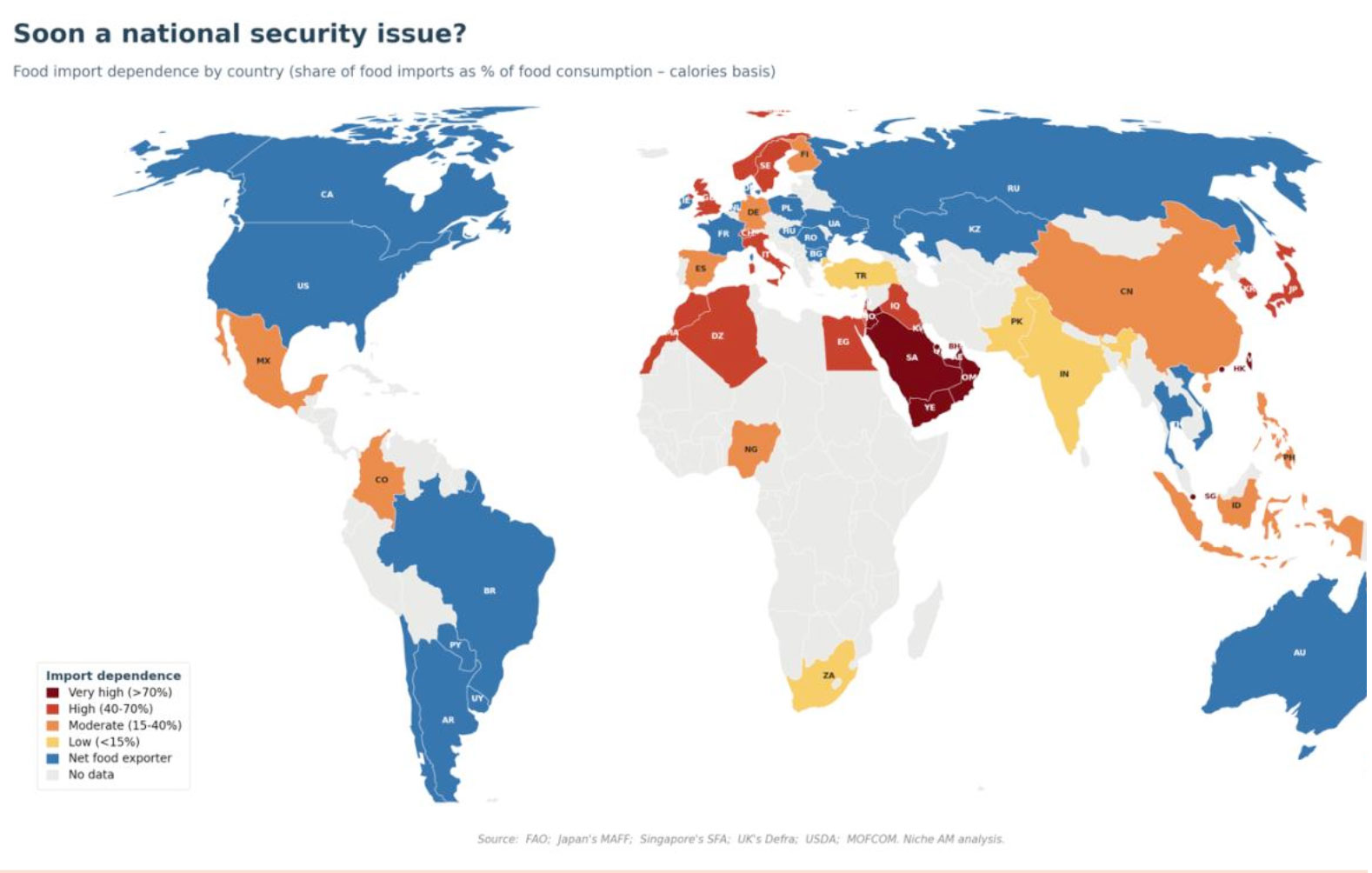
For now, government policy is mostly a brake on this shift, not an accelerant — which is part of why the gap between the science and consumption stays so wide. But that could change, and not for moral or ideological reasons. Sooner or later, governments may start treating protein the way they learned to treat oil and gas, i.e.: as a strategic resource to be secured. Any country that imports a large share of its food has an incentive to diversify how that protein is produced — and the market is pricing none of this today.
China is the clearest illustration. As incomes rose, its animal-protein consumption climbed sixfold between 1980 and 2020; its food self-sufficiency has fallen substantially since 2000 on most measures, and it now imports roughly a third of key food commodities.24 A leadership that has named food security a pillar of national economic security is unlikely to leave more than a billion “rice bowls” dependent on foreign soybean fields indefinitely.25
The import dependency runs deeper than soybeans. Feeding animals at scale also relies on imported nitrogen and phosphate fertilisers, whose supply is concentrated in a handful of geopolitically exposed producers — Russia and Belarus chief among them. Eating plant protein directly cuts out an entire tier of that fertiliser-intensive feed demand.
The shift towards alternatives is therefore not only a bet on scarce farmland, but on agricultural-input sovereignty. And in fact, China is now the world’s biggest public funder of agricultural R&D and a leader in cultivated-meat patents. We flag this not because we invest in China — we do not — but because it is the largest single signal that protein could soon become a strategic question rather than a wellness one. Nor is this a uniquely Chinese policy impulse. It is telling that Israel and Singapore — both small, acutely import-dependent economies — were among the first to approve cultivated meat for sale for human consumption.26
The key point for an investor is simply that a durable, state-backed sponsor of protein diversification would be a far more powerful force than any consumer fad — and one the market has not even begun to price.27
A brief overview of the alternatives to meat
Alternatives to meat are far wider than laboratory burgers. The most investable substitute today is simply fish and seafood, followed by vegetables, legumes and dairy.
Fish enjoys a structural advantage the rest of the protein complex lacks. Unlike red meat, it faces no carcinogenicity findings, or “meaty name” bans, and retains a broadly healthy reputation. At the same time the wild-caught supply is increasingly constrained — by vessel-fuel costs, by tightening catch quotas, and by warming, shifting fish stocks — which tightens supply precisely as demand for healthy protein grows.
Beyond fish, vegetables, legumes and dairy sit the three engineered routes people usually have in mind. Plant-based meat products use proteins, fats and fibres from crops — soy, peas, wheat — shaped to mimic the taste and texture of meat; this is the category that boomed and busted in 2019–2024. Fermentation uses microorganisms, in the same kind of vessels breweries use, to make proteins and fats directly. Cultivated (or cell-cultured) meat grows real animal muscle and fat cells in bioreactors, without raising or slaughtering an animal.
Cultivated meat is the earliest-stage and most capital-intensive of the three, but the peer-reviewed evidence on its potential is striking: the first study built on real cultivated-meat company data found the process could cut climate impact by up to 92%, air pollution by up to 93% and land use by up to 95%, measured against conventional beef produced with renewable energy.28
The first cultivated beef burger was unveiled in London in 2013 — a scientific proof-of-concept, not a commercial product, since regulatory approval is still pending.29
Its widely cited cost of roughly €250,000 was clearly not the price of a hamburger but the cost of the entire research programme behind that first prototype. Mark Post’s team at Maastricht University had to develop the technique from scratch: culturing bovine muscle stem cells and growing them into thousands of tiny muscle fibres. All of this at laboratory scale, with no economies of scale, involving years of skilled researchers’ work and expensive culture and lab equipment. The project was funded by Sergey Brin, co-founder of Google.
Cultivated meat is today approved for human consumption only in Singapore (2020), the United States (2023), Israel (2024), Hong Kong (2024), Australia (2025) and New Zealand (2025).
Edible insects represent another viable alternative protein source. Typically fed on organic waste, they are processed into nutrient-dense flours and oils. Right now they are not aimed at the Western dinner plate: in Europe and the US, insect protein is today overwhelmingly a feed ingredient, replacing fishmeal and soy in aquaculture, poultry and pet food, and it reaches people only as a milled flour in snacks and baked goods — though whole insects have been eaten across Asia, Africa and Latin America for centuries, by an estimated two billion people.30
The obstacle in the West, of course, is not nutritional or health-related but cultural. Insects carry none of the health problems identified for meat earlier in this paper, and there is nothing engineered about them (i.e.: no cells, no bioreactors, etc). They are arthropods, not red meat: there is no evidence linking arthropods to cancer, heart disease or type-2 diabetes. The one established caveat is allergy — people who react badly to prawns and shellfish may react to insects too, and EU labels are required to say so. That caveat is itself revealing: insects are close relatives of shrimp and crab, and the human immune system cannot reliably tell a cricket from a prawn. Only culture can.31
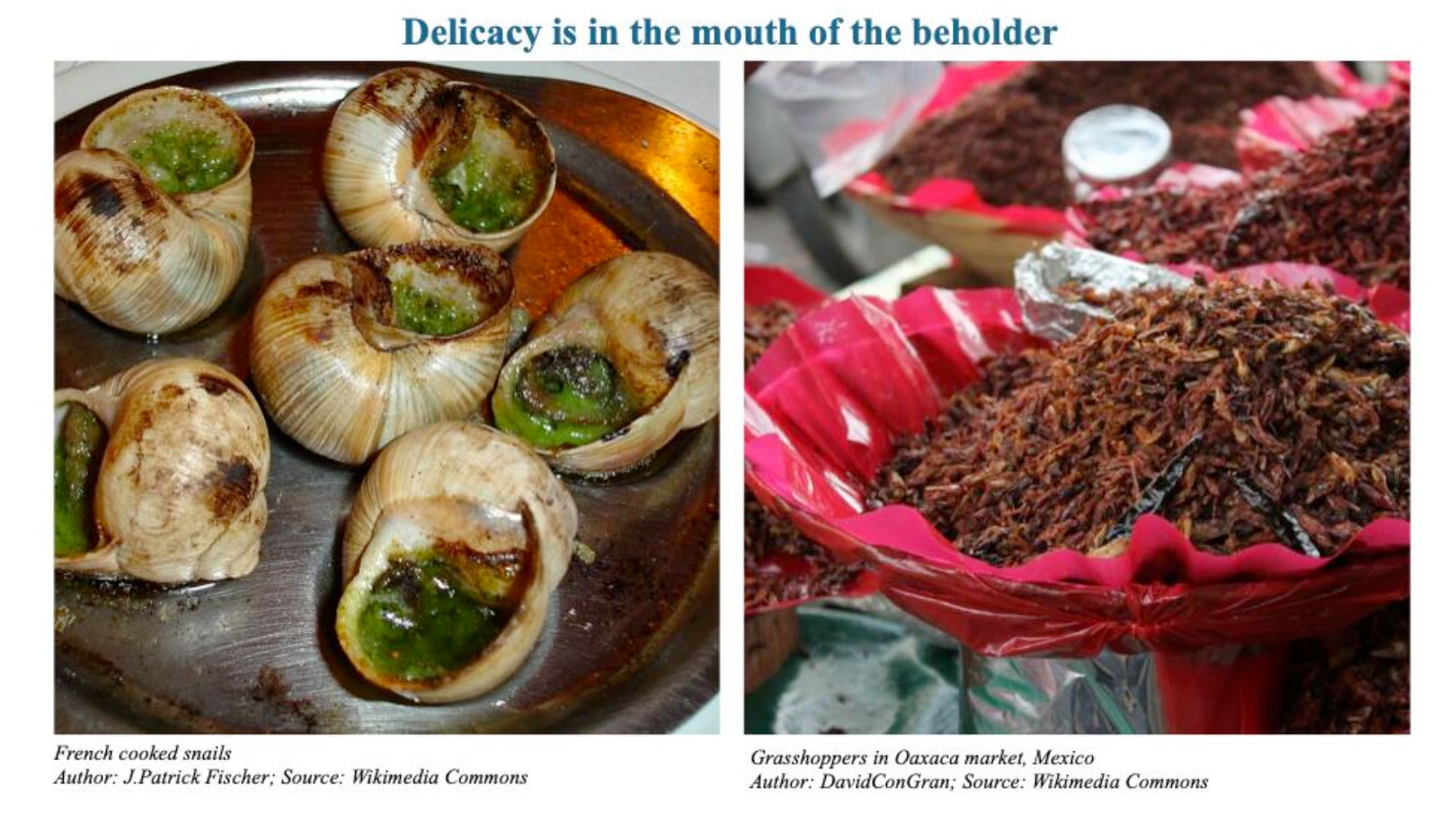
The same Western palate that recoils at a grasshopper pays a premium for the fattened liver of a force-fed goose, for snails in garlic butter or for the tripes of a ruminant. In Mexico, that hierarchy is simply inverted: chapulines are a street snack sold by the basket in Oaxaca’s markets but escamoles — ant larvae, known as “Mexican caviar” — are served in the country’s finest restaurants at roughly the price of a high-end steak.32
Taboos of this kind are constraints on demand, but they are also historically unstable and could be transitory. Lobster is the obvious reminder: for two centuries colonial New Englanders despised lobster as fertiliser and fish bait — it was called “the cockroach of the sea,” disdained precisely because it looked like a giant insect. The same creature, unchanged, is now one of the most expensive items on the menu. What changed was not the animal. It was us.33
For our purposes, the investment case for the No Meat’s Land niche does not require anyone to eat laboratory-meat or insects. If these never reach a Western plate, our cheap and cash-generative fish, dairy and vegetable holdings are entirely unaffected. In fact, right now, both alternative-meat and insects remain almost entirely private businesses, and we are exposed to neither of them — yet we follow the sectors closely and may invest as and when listed (and attractive) opportunities emerge.
Even Big Meat is hedging
This is not an investment case for chemically engineered-meat. The most investable substitutes to meat today are the everyday ones: fish and seafood, dairy, vegetables and legumes, which are the areas where we are currently invested in the No Meat’s Land niche. Seafood and dairy alone are each markets in the region of a trillion dollars, against a meat market of roughly $1.7tn. Only beyond them sit the three engineered routes people usually have in mind (i.e.: plant-based, fermentation-based and cell-based meat) — together barely $14bn today.
This is not a thesis against Big Meat either.
Even the alternative-meat field is populated by more than 600 companies, most of them small and private, but some of the world’s largest conventional meat and food companies are themselves investing in the alternatives: JBS, the world’s largest meat producer, has funded a cultivated-meat division and bought the Dutch plant-based Vegetarian Butcher business from Unilever, and the three largest meat companies and two largest food companies are all now investors in plant-based or cultivated protein.34
The cultivated-meat field has also drawn capital from innovators such as Bill Gates and Richard Branson and from other established players such as Tyson Foods and Cargill. The same names are also backing insects: in 2023 for example Tyson Foods took a minority stake in the Dutch black-soldier-fly specialist Protix and announced a joint venture to build an insect-ingredient plant in the United States, its larvae to be reared on by-products from Tyson’s own slaughterhouses.35
We expect therefore the traditional food majors to play a central role from here, steadily transitioning their operations towards alternative products.
The motivation is unlikely to be green — it is profits and risk management, as alternative meat carries fewer supply-chain risks (from animal-disease epidemics to tightening environmental rules). We take this as a useful corroborating signal: this is not an ideological thesis at odds with the meat industry, but a direction in which the meat industry’s own capital is already, quietly, flowing.
As for the scale of the opportunity, sell-side and consultancy estimates have put alternative-meat’s potential share of the conventional meat at around 50% by mid-century.36 Today that share is tiny: in the US for example, plant-based meat is only about 1% of the retail meat market. We treat the 50% figure as illustrative of the size of the opportunity rather than a number we are underwriting; our discipline is to own cheap, cash-generative businesses today, not to forecast a market share three decades out.
How we play it
A word on what these data mean in practice in terms of investment strategy. We are deep-value investors: we buy cheap, profitable, asset-backed businesses, and it happens that a cluster of them today sits in the vegetarian, pescatarian and vegan corners of the food world. We are not trying to own the next imitation burger — in fact we own no pure “alternative-meat” stock at all right now, because we see no deep-value opportunity among them in public equities. The companies that blew up in 2021 were, for the most part, loss-making, cash-burning and priced for a future that didn’t arrive. The No Meat’s Land niche, held within our Asian Value Niche fund, instead holds a tightly diversified basket of profitable, asset-rich, often net-cash, dividend-paying businesses across three sub-niches — vegetarian, pescatarian and vegan — bought at multiples that reflect neglect rather than the quality of the underlying assets.
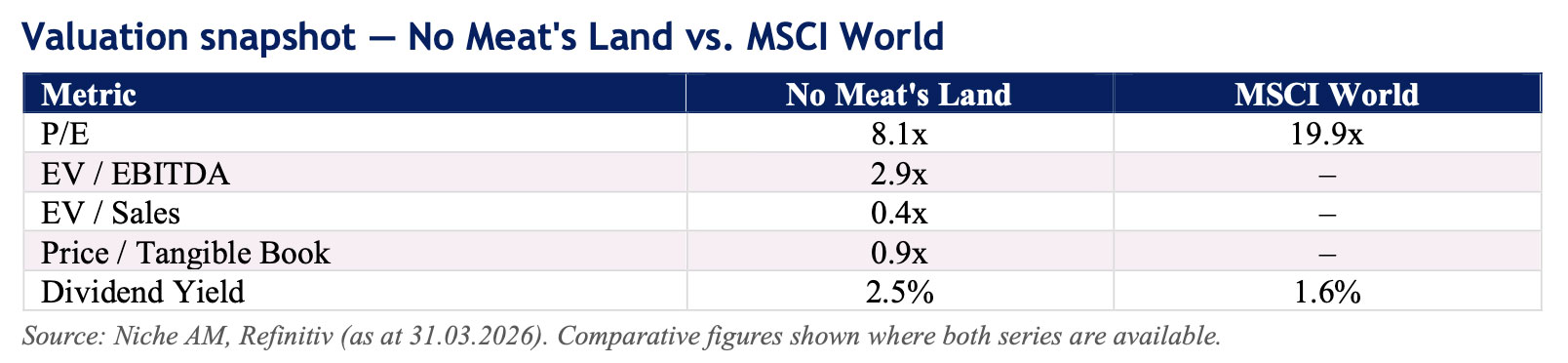
Many of our holdings trade below tangible book (i.e.: the value of inventory, real estate or fishing fleets). Korean fishing group Silla for example trades at around 0.3x tangible net assets, with cash and investments worth more than twice its market capitalisation. In other words, these are not concept stocks: they are cheap, real businesses that happen to sit on the right side of a long structural trend.
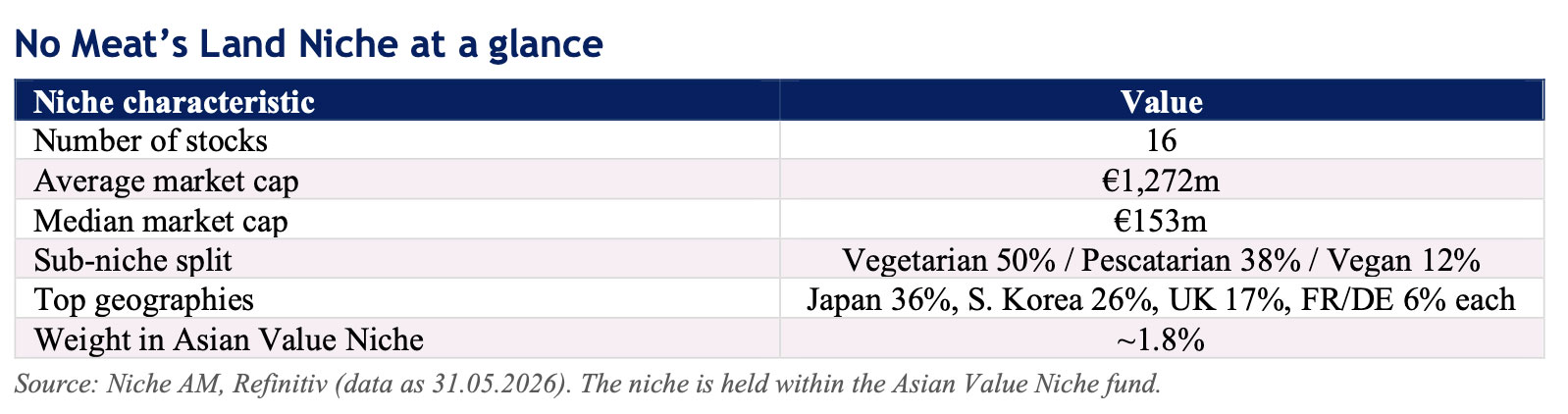
Consistent with our house style, the niche is highly diversified by holding (16 names today, with new ones added and others retired as valuations normalise) and — importantly — liquid. It is one of fifteen uncorrelated niches inside the Asian Value Niche fund, where it currently represents a deliberately small weight: enough to matter when the theme re-rates, small enough to be patient while it does not.
Why now?
Why should 2026 be the entry point rather than next year, the year 2030 or any other time in the future? We are not in the business of timing perfect entry or exit levels. We buy when stocks of fundamental sound businesses with favourable trend dynamics trade at deeply discounted valuations. And for the alternatives-to-meat niche that time is now. The niche hype is gone, the speculative names have de-rated by 80–90% and the speculators and momentum traders have left – we are buying into neglect, not euphoria: the niche trades at around eight times earnings, below tangible book, on a dividend yield well above the market — about the cheapest the theme has been since it existed.

Conclusion
We are not telling anyone what to put on their plate, and this is not an ESG thesis dressed as research. We are not making the investment case for alternative meat either — we own none of it right now: we are making the case for the stocks of businesses producing alternatives to meat, which include fish, vegetables, legumes and dairy, as well as chemically engineered meat-alternatives.
Our thesis rests on health economics, the biology of raising animals, geopolitics and above all, valuation. The market has thrown out a structurally important theme along with the speculative excess that briefly surrounded it; what is left is cheap, profitable, and — in the not-too-distant future — quite possibly backed by security of supply objectives as well.
Risks to the thesis
Three developments could, in principle, erode some of the structural pull away from meat. In each case the evidence is real but partial — and, importantly, the thesis downside is anyway limited by the type of stocks we own: cheap, profitable, asset-backed, often net-cash businesses bought below tangible book. That margin of safety does not depend on any forecast about any source of protein in 2050.
1. Methane-reducing feed additives could reduce the climate cost. A group of selected additives and red seaweed have been found to be effective in cutting enteric methane to a significant degree. Yet these seem to work mainly in confinement systems, red seaweed cannot yet be farmed at anything like the scale required, and additives incur costs with no revenue offset absent carbon incentives. They also address only climate, leaving the health, land-use and feed-economics drivers untouched.37
2. Beef productivity could improve further. Genetics, feedlot efficiency and reproductive technology have made beef steadily cheaper and cleaner per kilogram: the FAO estimates the emissions intensity of beef fell ~38% between 1961 and 2022, US herd numbers dropped from ~135m head in the 1970s to ~90m today while producing more beef than it did then; and American ranchers now produce a fifth of the world’s beef with less than a tenth of the world’s cattle.38 If beef keeps closing its cost and footprint gap, the structural pull weakens. Yet our thesis would still hold: efficiency lowers emissions intensity per kilo but not absolute emissions, which keep rising with population and demand growth; it does nothing for the health and carcinogenicity evidence; and the gap between beef and a plant protein is so large (roughly 30-to-1 on feed, ~60-to-1 on emissions per gram of protein) that even large incremental gains do not close it enough.
3. Alternative meat and/or insects never reach commercial scale. Possible — but irrelevant to what we own. Some studies have identified biological and engineering bottlenecks for cultivated meat for example, such as slow cell-doubling times, bioreactors constraints and dependence on scarce high-purity media.39 Consumers also seem to be rejecting alternative-meat products for the time being, with plant-based meat being for example only ~1% of the US retail meat market. Taste, price and the “ultra-processed” label of alternative-meat may remain real barriers. Finally, regulation may stay hostile rather than turning supportive. Yet our No Meat’s Land niche owns no alternative-meat or insect stocks — if those businesses never scale, our cash-generative fish, dairy and vegetable holdings are entirely unaffected.
Sources & notes
1 YouGov/The Economist
2 In Europe the gap is closing faster: branded vegan meat still carries roughly a 25% premium, but private-label ranges have reached outright price parity. Lidl Germany aligned the prices of most of its Vemondo private-label plant-based range with comparable animal products in October 2023, with a resulting uplift of over 30% in plant-based sales (Lidl, 2024).
3 Fox News; CBS News; Food Safety Magazine, Jan–Feb 2026.
4 Good Food Institute; Food and Agriculture Organization of the United Nations (2019)
5 Excluding the moral dimension from our investment thesis should not be read as indifference to it. We are not unsympathetic to the ethical questions raised by animal farming — in particular the treatment of livestock under industrial confinement. For a treatment of the moral case, with specific reference to the conditions in which pigs are raised, see Noah Smith, “The Way We Treat Pigs Is a Sin,” Noah Smith, 31 May 2026.
6 These classifications describe the strength of the evidence that something can cause cancer, not the magnitude of the risk: bacon is not as dangerous as cigarettes.
7 WHO/IARC (2015) and subsequent reviews. The Economist, “Is red meat unhealthy?” (March 2025).
8 Drabik-Markiewicz, Dejaegher, De Mey, Kowalska, Paelinck & Vander Heyden, “Influence of putrescine, cadaverine, spermidine or spermine on the formation of N-nitrosamine in heated cured pork meat,” Food Chemistry 126 (2011); De Mey et al., “Evaluation of N-Nitrosopiperidine Formation from Biogenic Amines During the Production of Dry Fermented Sausages,” Food and Bioprocess Technology (2013); Del Rio et al., Scientific Reports 9 (2019); EFSA Panel on Biological Hazards, “Scientific Opinion on risk-based control of biogenic amine formation in fermented foods,” EFSA Journal (2011).
9 Nature Medicine (2026)
10 University of California, San Francisco randomised-controlled trial (2019): red-meat diet raised cholesterol and TMAO (trimethylamine-N-oxide) versus a matched meat-free diet.
11 Bastide et al., Cancer Research (2015); WCRF/AICR Continuous Update Project. Micha, Wallace & Mozaffarian, Circulation (2010, updated 2012); Lancet Diabetes & Endocrinology (2024)
12 Van Boeckel et al., “Global trends in antimicrobial use in food animals,” PNAS 112 (2015); Van Boeckel et al., Science 365 (2019); Review on Antimicrobial Resistance (O’Neill, 2016); Farm Animal Investment Risk & Return Initiative
13 Gerber et al., FAO 2013; FAO 2022; Poore & Nemecek, Science (2018), Xu, Sharma et al., “Global greenhouse gas emissions from animal-based foods are twice those of plant-based foods”, Nature Food 2 (2021)
14 IPCC AR6; FAO. Feed additives that reduce the methane cattle produce can blunt part of the climate cost. Seaweed-derived compounds for example are said to cut enteric methane by roughly 37% in grazing-cattle trials, and more under controlled feeding (Meo-Filho et al., PNAS 2024). We treat this as an offset to the climate cost of animal feed — and a risk to the thesis.
15 Bruce Friedrich, The Guardian (31 Jan 2026); Financial Times (18 Feb 2026)
16 Poore & Nemecek, Science 360 (2018), meta-analysis of ~38,000 farms across 119 countries; Our World in Data.
17 Mekonnen & Hoekstra, “A global assessment of the water footprint of farm animal products,” Ecosystems 15 (2012). Green water (rainfall) accounts for the great majority of the beef figure; the blue-and-grey footprint alone is roughly 925 l/kg.
18 Stat (2026)
19 National Agricultural Law Center, “Alternative Protein Laws: State Compilation” (2025–26); Food Safety Magazine (June 2025); Upside Foods / Institute for Justice
20 UK’s Food Standards Agency (2024), UK’s Food Standards Agency (2025), UK’s Department for Environment Food and Rural Affairs (2024); UK’s Animal & Plant Health Agency (2024)
21 Bloomberg, “Italy Bans Lab-Grown Meat” (16 November 2023); Legge 1 dicembre 2023, n. 172, artt. 2, 3 e 5; Osborne Clarke, “Italy bans lab-grown meat, violating EU procedure” (2024); Hungarian National Assembly (18th November 2025)
22 Financial Times (5 Jan 2026): EU parliament voted to restrict “burger,” “sausage,” “steak” and similar terms for plant-based products; BEUC consumer research found shoppers understand clearly labelled vegetarian/vegan products; Aldi, Lidl and Burger King opposed the move; UK SPS alignment with the EU could extend the rule.
23 Messina & Messina, “Nova fails to appreciate the value of plant-based meat and dairy alternatives in the diet,” Journal of Food Science (February 2025). See also Bryant Research, “The Ultra-Processed Myth” (2024).
24 China’s Ministry of Commerce; Reuters; USDA Foreign Agricultural Service (Dec 2025/Jan 2026).
25 Adam Tooze, Financial Times (2 May 2026); Bruce Friedrich, cited in Damian Carrington, The Guardian (31 Jan 2026); Ryan Huling, Los Angeles Times (17 March 2026): food security described by Xi Jinping as “a foundation for national security” and as “pillar of national economic security” in the 14th Five-Year Plan of 2021.
26 Caitlin Welsh, Center for Strategic and International Studies, in foreword to Bruce Friedrich’s Meat (2026).
27 China became the largest public funder of agricultural R&D after 2011, spending over $10bn a year by 2015 — roughly twice US expenditure (USDA Economic Research Service). Of the top 20 cultivated-meat patent applicants, eight are Chinese public institutions, mostly universities (Zhejiang, Jiangnan, Ocean University of China); Chinese public institutions have filed more cultivated-meat patents than those of the US and Europe combined (Good Food Institute APAC, 2025).
28 Sinke, Odegard et al., A life-cycle assessment of cultivated meat, CE Delft, GAIA and The Good Food Institute (2021)
29 G. Owen Schaefer, “Lab-grown meat,” Scientific American (2018), Pallab Ghosh, “World’s first lab-grown burger is eaten in London,” BBC, August 5, 2013
30 FAO, Edible Insects: Future Prospects for Food and Feed Security (2013); International Platform of Insects for Food and Feed (IPIFF) https://ipiff.org/
31 EFSA Panel on Nutrition, Novel Foods and Food Allergens, safety opinions on Tenebrio molitor, Locusta migratoria, Acheta domesticus and Alphitobius diaperinus (2021–2023).
32 Ramos-Elorduy, on Mexican entomophagy; FAO (2013).
33 William Wood, New England’s Prospect (1634); Sandy Oliver, food historian, cited in Boston.com (2023), who notes that the widely repeated claim that lobster was contractually rationed to servants and prisoners has no contemporaneous documentary basis.
34 Bloomberg, The Guardian (31 Jan 2026)
35 That US plant is now on hold, and the wider insect-farming sector has been through a brutal shakeout — Ÿnsect, once the largest player in the field, was liquidated in late 2025, and Innovafeed suspended its US pilot after eighteen months. Protix has meanwhile pivoted towards South-East Asia and South Korea, where feedstock rules are looser and operating costs far lower. Sources: Tyson Foods press release (17 October 2023); AgFunderNews, “Protix targets Asia as Tyson-linked US insect ag project stalls” (April 2026)
36 McKinsey: Alternative proteins: The race for market share is on (2019); Barclays (2019); Credit Suisse Research Institute (2021)
37 Van Gastelen et al. Penn State / Kebreab (2021–2024); Elanco/FDA approval (May 2024); Roque, Venegas, Kinley, Kebreab, PLOS ONE (2021); Kebreab et al., PNAS (2024).
38 Benjamin Goren, “More and More, Beef (And Less Climate Impact)”, The Breakthrough Institute (21 November 2024), drawing on FAOSTAT emissions-intensity data and the 2022 US Census of Agriculture; Capper, International Journal of Life Cycle Assessment (2018) on US productivity gains 1977–2007.
39 Humbird, “Scale-up economics for cultured meat”, Biotechnology & Bioengineering 118 (2021); Negulescu et al., Biotechnology & Bioengineering 120 (2023); review in Nature Food (2024).
Legal disclaimer
This document, together with any presentation and related material, is intended exclusively for marketing and information purposes. It is not a legally binding document, contains no representation and does not constitute an offer or invitation to invest in any of the funds of Niche Asset Management Ltd. (the “Fund”). Furthermore, it does not constitute a solicitation for any such offer or invitation, nor may it be regarded as part of it or of its distribution in connection with any contract relating to the Fund. This document, any presentation made in conjunction with this document and any related material are preliminary and for information purposes only. They do not constitute an offering memorandum, contain no representation and neither constitute nor form part of an offer or invitation to subscribe for any of the Niche funds (each, the “Fund”). Furthermore, they neither constitute nor form part of any solicitation of such offer or invitation, nor do they (or any part of them), nor the fact of their distribution, form the basis of, or may be relied upon in connection with, any contract relating thereto. The information contained in this report document has been compiled solely by Niche Asset Management Ltd (known as “Niche AM”), authorised and regulated by the Financial Conduct Authority (RN783048) and registered in England and Wales 10805355. The information and opinions contained in this document are not intended to be complete and may be subject to change at any time. No representation, warranty or undertaking, express or implied, is given as to the accuracy of the information or opinions contained in this document, and Niche Asset Management Ltd and/or its partners accept no liability for the accuracy and completeness of the information. Investments in the funds are subject to market risks, including the potential loss of capital.
The Fund’s investment strategy is speculative and entails a significant risk of losing part or all of the capital invested. Market, political, counterparty, liquidity and other risk factors may have a significant impact on the Fund’s investment objectives, while past performance is neither a guide to nor indicative of future results. The distribution of this document and the offering of the Fund’s units may be restricted by law in certain jurisdictions, and accordingly anyone coming into possession of this document should be aware of and comply with any applicable laws or regulations. Niche AM’s funds are not yet available for distribution in all countries. Prospective investors are invited to contact Niche AM to verify the countries of registration. Any failure to comply with these restrictions may constitute a violation of the laws of such jurisdiction. The reproduction of this information, in whole or in part, without the prior consent of Niche AM is also prohibited. This document may be communicated or passed only to persons to whom Niche AM is permitted to communicate financial promotions pursuant to an exemption provided under Chapter 4.12 of the Conduct of Business Sourcebook (“COBS”) (“Permitted Recipients”). Furthermore, no unauthorised person may communicate this document or otherwise promote the Funds or the units therein to a person in the United Kingdom, unless that person is (a) a Permitted Recipient (b) a person to whom an authorised person is permitted to communicate financial promotions relating to the Fund or to promote the Fund under the COBS 4.12 rules applicable to that authorised person. The securities mentioned in this document have not been registered under the Securities Act of 1933 (the “1933 Act”) or under the securities laws of any other US jurisdiction.
Such securities may not be sold or transferred to US persons unless such sale or transfer is registered under the 1933 Act or exempt from such registration. This document is a marketing communication intended exclusively for professional investors. Prospective investors are advised to read carefully the Prospectuses and the Key Investor Information Documents (KIID) for all details, including risk factors and fees, before making any final investment decision.
Prospectuses, supplements, KIIDs and a Summary of Investor Rights are available free of charge at https://nichejungle.com/regulatorydocuments and at https://nicheam.com/legal.
This is a marketing communication intended exclusively for professional investors. Please refer to the Funds’ Prospectuses and the KIDs before making any investment decision.
Do you enjoy our Niche Insights? Read more here
Follow us on LinkedIn
Niche Asset Management Limited
Authorised and regulated by the Financial Conduct Authority
17 Lennox Garden London SW1X 0DB – Registered in England – No. 10805355

