


Aspice, Respice, Prospice
Bank of America’s new Fund Manager Survey (FMS), released this week, confirms an old saying — attributed to a local entrepreneur — that “Indonesia is the largest invisible object in the world.”.
It’s hard to disagree.
Among the top 15 countries in the world by extension (larger than the whole of Western Europe), 4th by population (moreover very young), among the top 16 countries in the world by nominal GDP, very rich in natural resources, and a strategic geopolitical position between the West and China, Indonesia remains one of the great forgotten markets: according to BofA’s FMS — which collects the opinions of about 200 fund managers with total assets under management of more than $500 billion — Indonesia is the least loved country in Asia-Pacific.
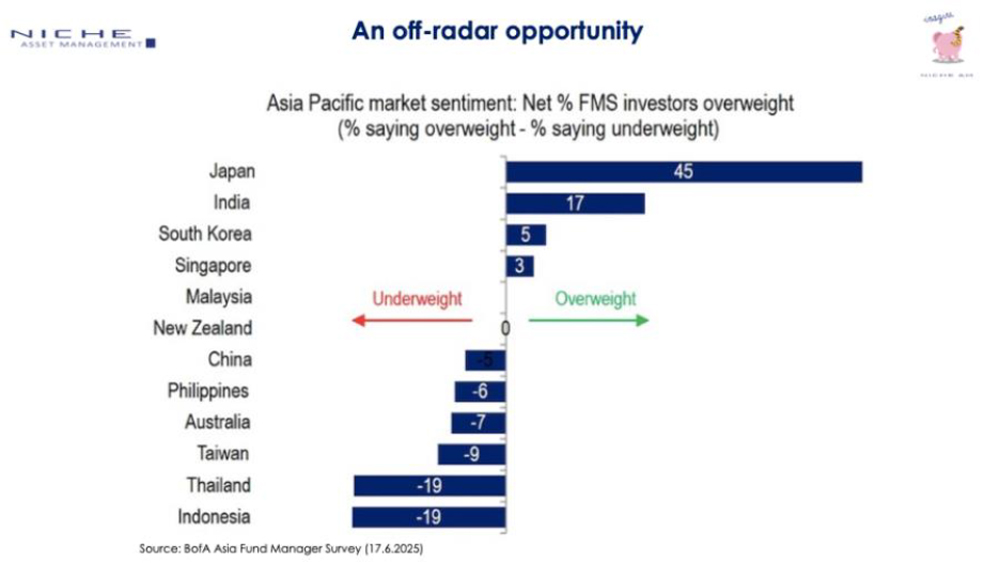
For any investor, such an extreme view should merit further analysis. Niche AM provides institutional investor with exposure to a portfolio of 150 Indonesian stocks that trades below 7x earnings and at 35% discount on tangible equity – valuations that already discount very adverse scenarios. Scenarios that, as seasoned investors in the area, we struggle to identify.
The negative perception of the area also reverberates on its currency, although the rupiah has extremely solid fundamentals.
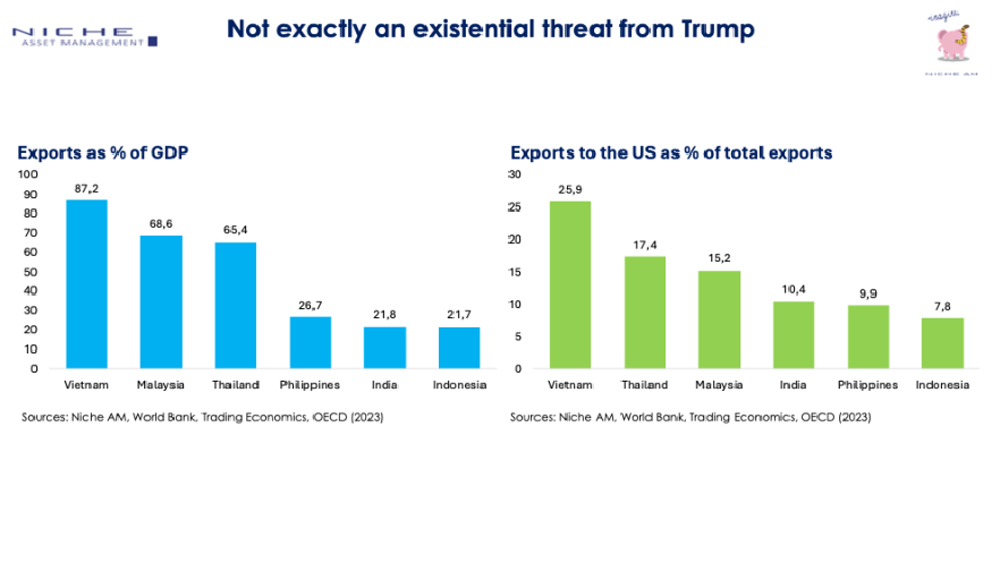
The risk of tariffs linked to Trump plays a role, but we believe it is exasperated: Indonesian exports to the United States are worth just $26 billion – less than 8% of the country’s total exports and less than 2% of GDP, the lowest exposure among peers in Asia Pacific (in fact, among these, Indonesia is the least dependent country on exports). The narrative of a systemic threat related to Trump’s trade war does not stand the test of numbers.
The current macro environment could, on the contrary, play in Indonesia’s favor, both on the currency and equity fronts:
- The flight from Trump’s uncertainty should support credible emerging currencies such as the rupiah;
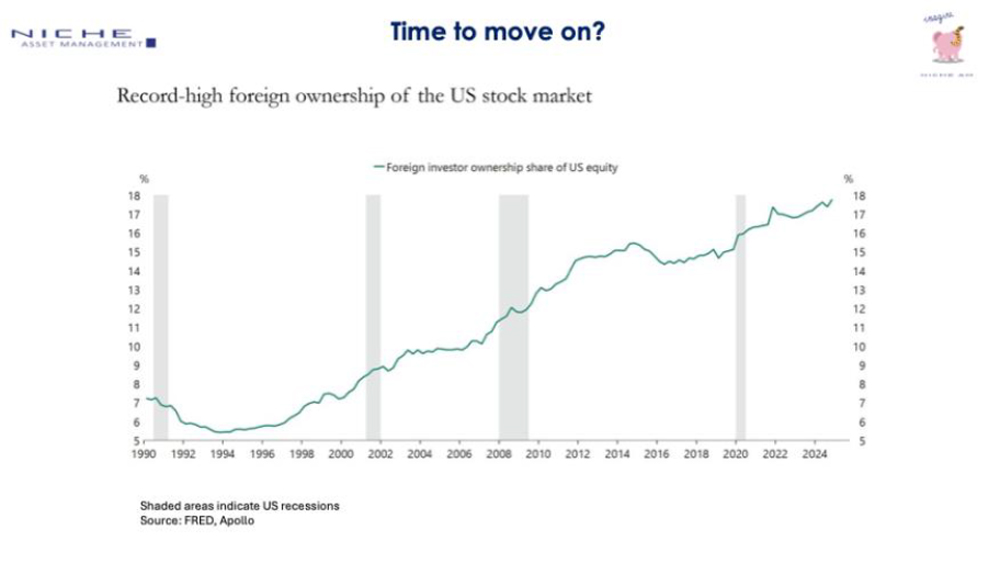
- A gradual reallocation of capital, after years of hyper-concentration on US indices, could finally bring attention back to more peripheral markets. In a relatively small market like Indonesia, even a modest global rebalancing could have a significant impact on prices;
- Indonesia is also expected to benefit from a growing demand for diversification away from China. More and more investors in emerging countries could, in the near future, turn to looking for alternatives, in the area, to a slowing China, to a Taiwan that does not incorporate geopolitical risks and to India’s valuations. In addition, Indonesia could benefit from the diversification of its supply chain, which is now very Sinocentric, becoming a key hub in a number of industries linked to its immense mineral and agricultural resources.
At the domestic level, since his election in October 2024, President Prabowo has progressively reoriented the government agenda away from traditional physical infrastructure towards “soft infrastructure” interventions, such as the school meals program and mass health screenings. These are populist programs, which produce more results in terms of political consensus than on population’s well-being. This is not a welcome outcome for the market, although it was part of his election platform.
However, let’s remember that 55% of the 280 million inhabitants live in Java, which represents just 7% of the country’s surface. Here the density is almost double that of Bangladesh! The rest of the country is rich in resources and blessed with a mild climate. And it lacks ports, airports, roads, homes, schools, hospitals, railways, etc. Structures that will be able to maintain and increase the already strong growth rate of the country. That’s why our fund focuses on infrastructure.
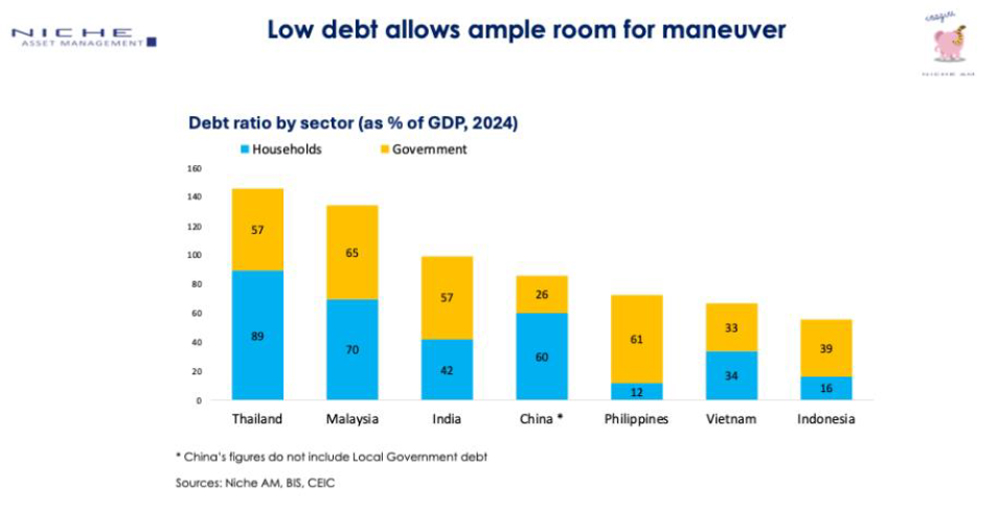
The challenge for Prabowo is the same as that of his predecessor Jokowi: how to finance the construction of the country while respecting the constitutional constraint of 3% deficit/GDP. However, it should be remembered that in Indonesia the public and household debt to GDP ratio is the lowest in the Asia Pacific area, leaving ample room for manoeuvre. In addition, private-public partnerships may be partly the solution.
…as soon as the world realizes the existence of this great country.
We never indicate an entry level. But we are already there. We believe there is a very good chance that Indonesia could become the new India, especially in the small-cap segment, where, as has already happened in India over the last decade, the excessive valuation gap with large-caps could finally be closed. Being a deep value investor does not mean “being right against everyone”, but having the discipline to analyze with detachment the risk/benefit profile of the investment opportunities available, which is often at its best when investor neglect is maximum.
Aspice, respice, prospice.

Click here for more details about our fund.
This is a marketing communication intended exclusively for institutional investors.
Please consult the Fund Prospectuses and KIDs before making any investment decisions.
Follow us on LinkedIn
Back


Onset Delay Reference
Onset Delay Reference