


EV charging speed? Checked! What’s next?
BYD’s announcement last week of a 5-minute charging EV battery marks another notable milestone in the evolution of electric mobility. The company claims its new system can add 470 km of range in just five minutes, bringing EV charging times in line with conventional ICE refueling. This directly addresses one of the most common consumer concerns—charging time—and is likely to boost confidence in the transition to EVs.
But while this is an exciting development, charging speed alone won’t drive mass adoption. The real enabler will be charging infrastructure.
The good news? Solving the charging infrastructure challenge is more straightforward than it seems.
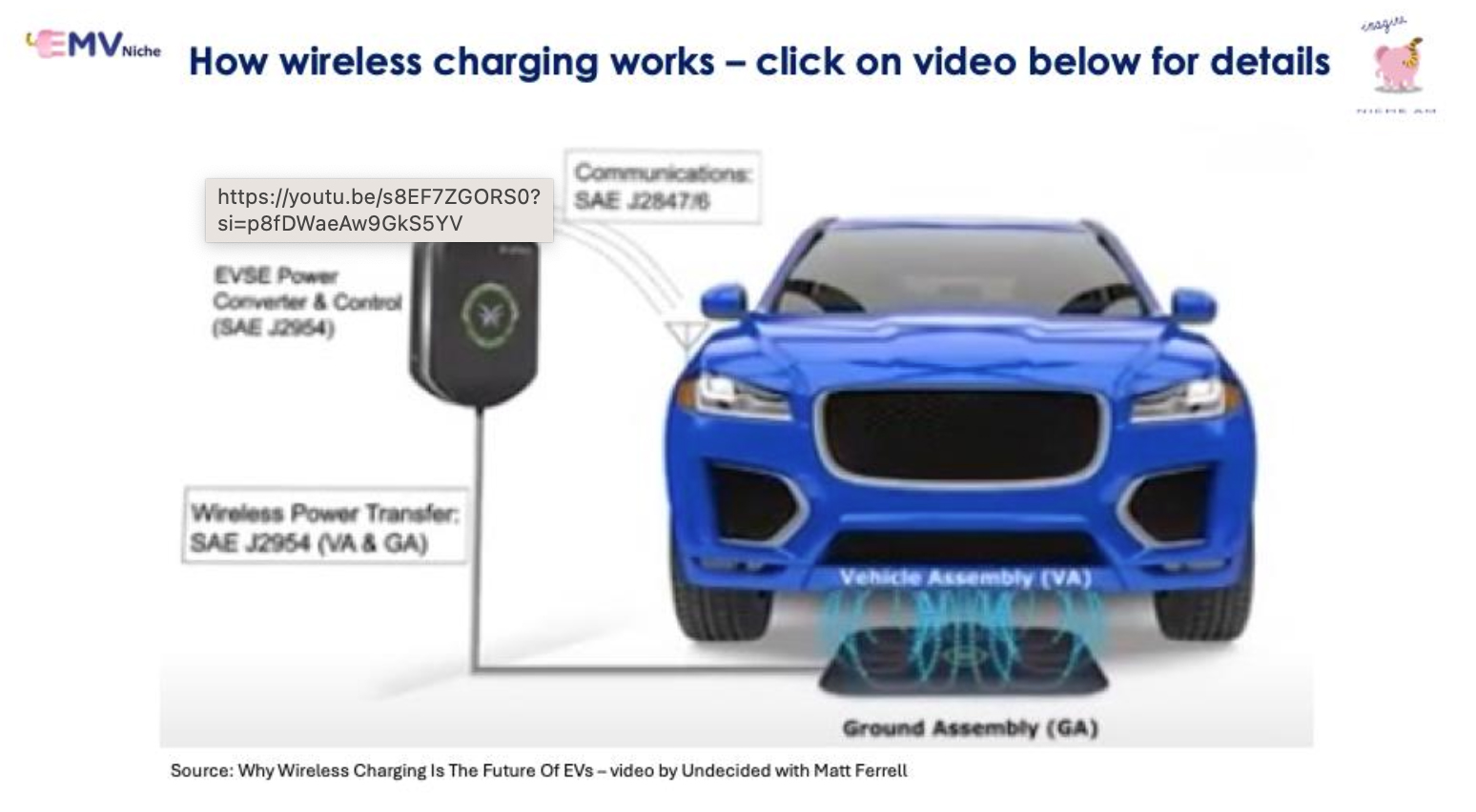
Induction charging, for example, offers a scalable solution that could integrate seamlessly into roads and parking spaces. Imagine parking spots connected to lamp posts, wirelessly charging EVs via magnetic resonance. This could be easily implemented at scale (even in Europe’s historical – and often very narrow – city streets), removing the hassle of plug-in stations. Companies like Witricity, an MIT spin-off backed by Qualcomm, Toyota, and Siemens, have already developed stationary wireless charging solutions for EVs.
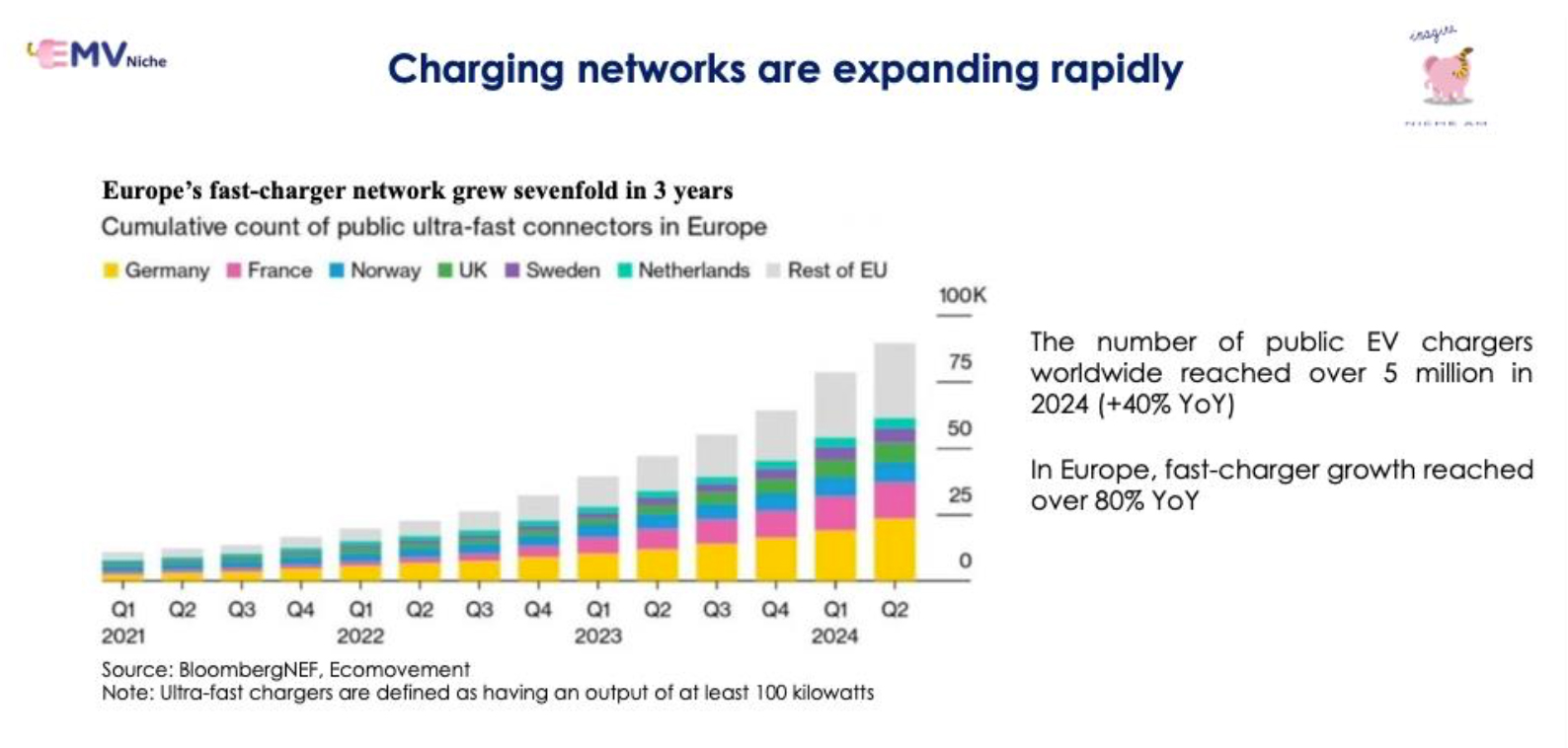
While waiting for wireless charging, traditional charging networks are expanding rapidly. Between 2021 and 2024, Europe’s fast-charger networks (by major operators such as Tesla, Ionity, Allego, and Fastned) grew footprint by 7x. Tesla alone aims to increase its Supercharger network in Europe by over 60% in 2025 vs 2023, while Ionity plans to nearly triple its high-power stations. The chart below shows the physical infrastructure momentum – the direction of travel is clear.
A major issue is that charging in public spaces remains too expensive due to excessive electricity markups by Utility / Power companies. A simple regulatory fix – such as government-imposed price caps – could resolve this.
What’s then stopping the progress on EV infrastructure? In a nutshell, political short-sightness, ideology, and entrenched interests in the legacy auto and power industries.
The EV S-Curve: Exponential Demand Ahead
Once infrastructure issues are tackled, EV adoption will accelerate exponentially.
We believe EV demand will significantly surpass consensus expectations, driven by:
- Superior technology vs. ICEs: EVs offer better performance, comfort, lower maintenance, and fewer restrictions (low-emission zones, etc.).
- Lower total cost of ownership, even without subsidies.
- Regulatory Support: Despite recent political pushback, policies remain broadly favorable:
- EU: The ICE ban may shift from 2035 to 2040, but it remains in place.
- CO2 targets for EU carmakers will now be calculated on a three-year average (2025-2027) instead of a hard 2025 target—but still, the requirement remains.
- US: The $7,500 EV tax credit under the Inflation Reduction Act (IRA) may be scrapped under President Trump’s administration, but manufacturing subsidies are likely to remain. Even Trump’s stance is shifting—after saying in 2023 that EVs should “rot in hell,” he bought a Tesla last week.
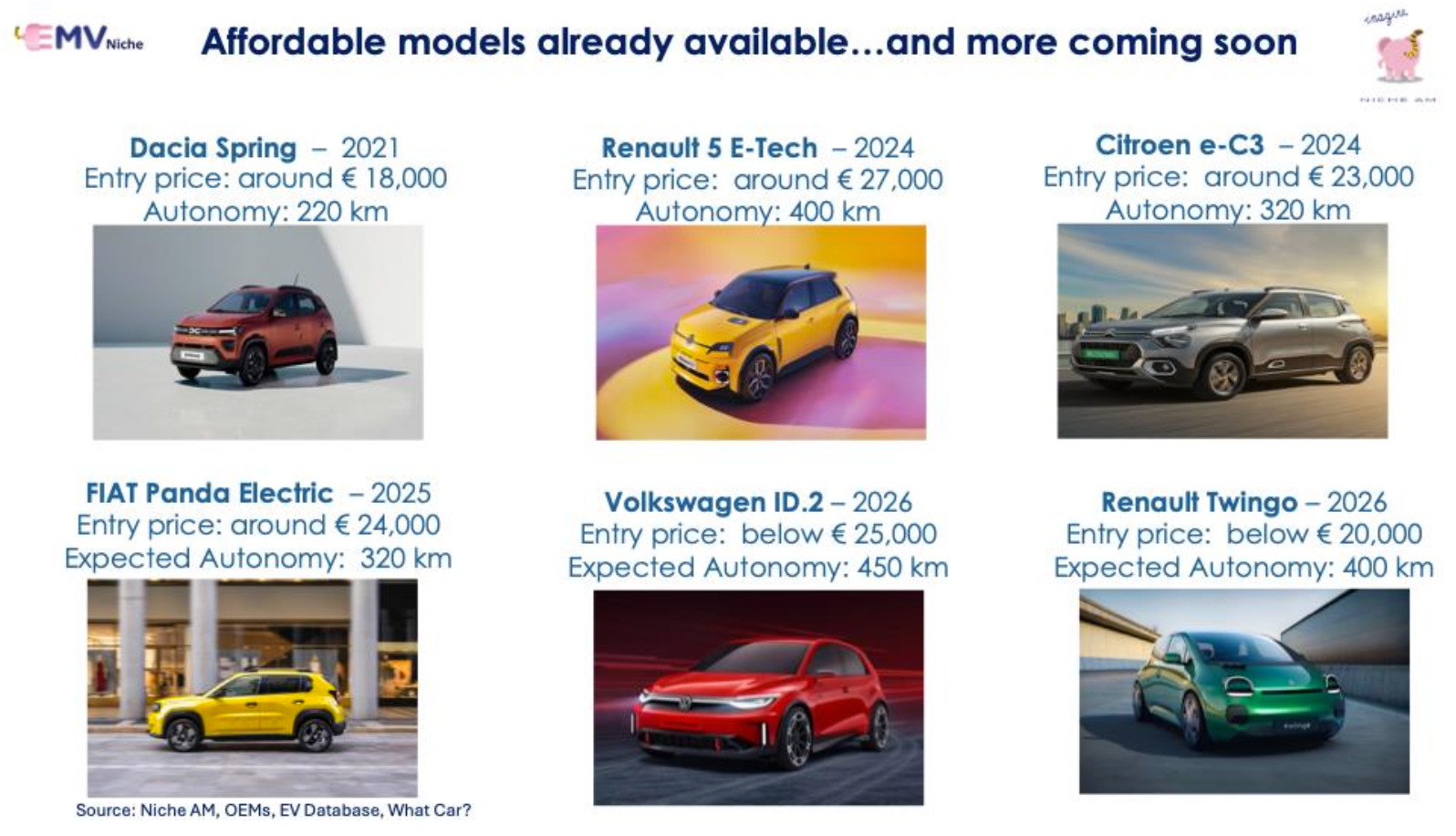
- Arrival of ever more affordable EVs
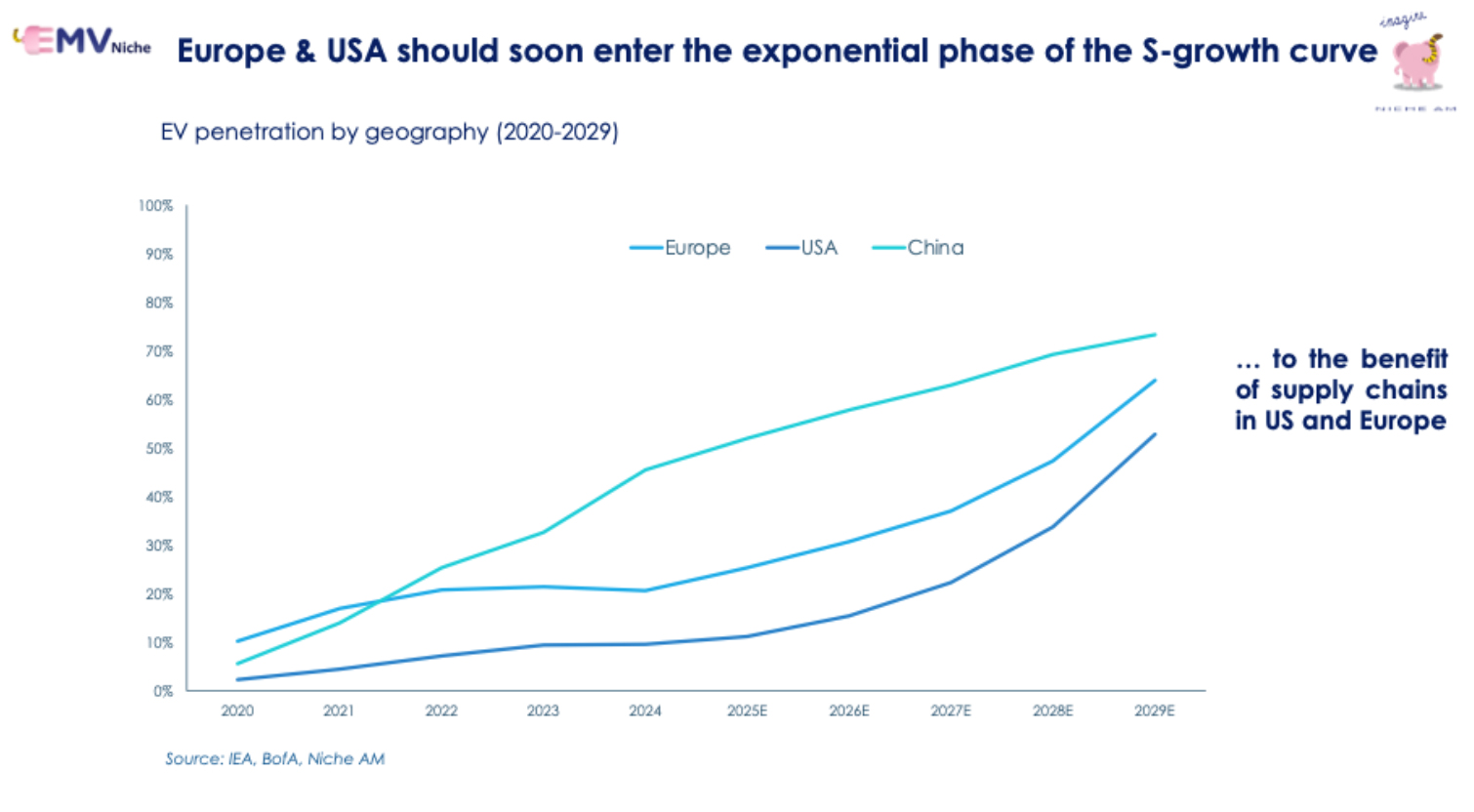
The writing is on the wall for ICEs (and automakers which won’t adapt). When a superior technology emerges, the old one is displaced and disappears. EVs are rapidly becoming the rational economic choice, making the long-term survival of ICEs unsustainable. Europe & the US should soon enter the fast growth phase of the S-penetration curve.
What This Means for Investors
A Silicon Valley adage states that every technological breakthrough takes twice as long as expected but half as long as we are prepared for. And the EV battery ecosystem (outside China) is certainly not ready for the coming surge in demand.
With low market expectations and potential supply constraints (as Chinese battery imports face strong restrictions in Europe and the U.S.), the battery space is primed for significant battery price increases and margin expansion, as well as an almost inevitable re-rating as growth expectations adjust.
Capturing the Opportunity via the Electric Mobility Value Niche fund
Our Electric Mobility Value Niche fund is the only active, global fund targeting the entire battery ecosystem, and also uniquely in the industry approaches the EV growth theme with a value style and a diversified approach, thus helping reduce volatility and better protect capital. The fund trades at a P/E of 8.5x and a Price to Tangible Book of 0.8x.
For details, visit: Niche AM – Electric Mobility Fund.
Follow us on LinkedIn
This is a marketing communication intended exclusively for institutional investors.
Please consult the Fund Prospectuses and KIDs before making any investment decisions.
Back


Sildenafil Onset Resource
Sildenafil Onset Resource