


Indonesia: a red flag o a buying opportunity?
The Indonesian market has lately been under significant downward pressure, with the MSCI Indonesia down in € about 15% since the beginning of the year, and about 28% from its September highs.
For us, this weakness represents a buying opportunity.
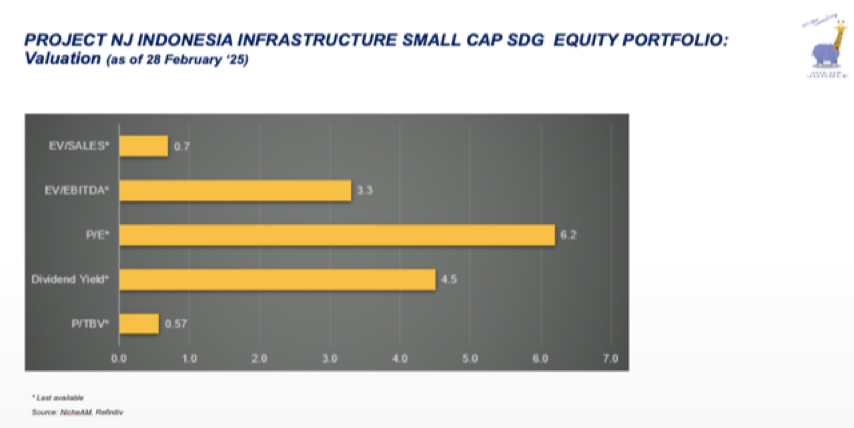
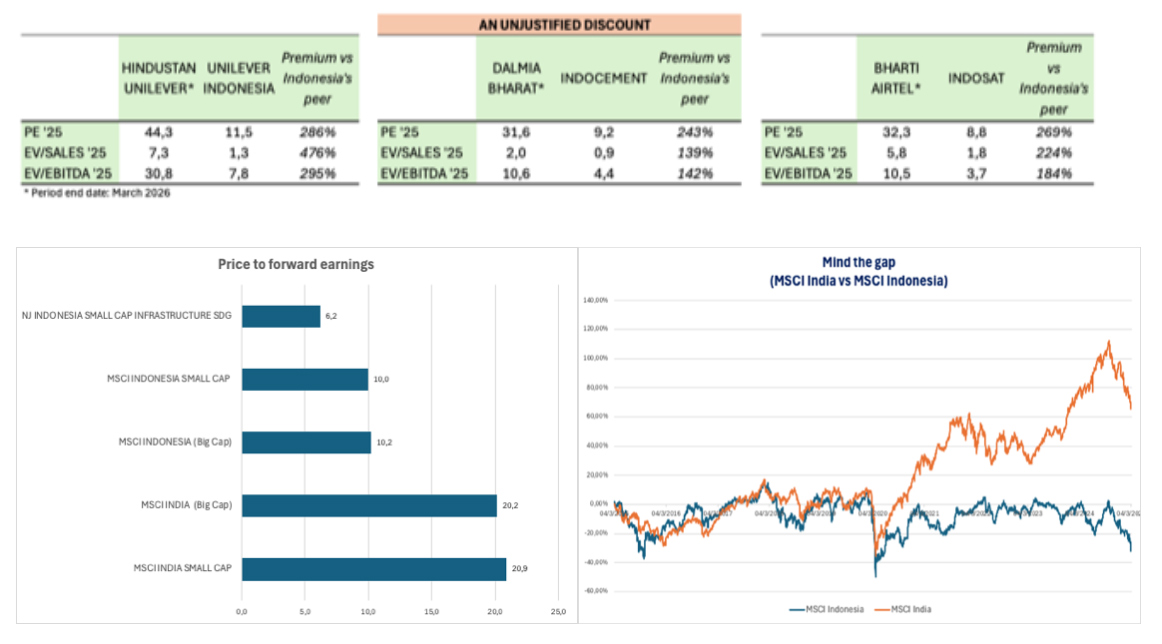
Despite short-term volatility, Indonesia remains an economy with strong fundamentals and robust long-term growth prospects. The current correction has pushed equity valuations to irrationally low levels, further enhancing Indonesia’s attractiveness relative to other emerging markets like India, which continue to trade at significantly higher valuations. Indonesia’s small caps remain particularly attractive. Historically, when markets like Indonesia recover, they tend to deliver extraordinary returns.
We recognize that investors exposed to Indonesia may feel significant stress during phases like these, and we empathize with these concerns. However, for those with the ability to increase their exposure, we strongly advocate doing so. We are actively adding to our equity positions in NicheJungle Indonesian Infrastructure Small Caps SDG, reducing our cash balance in the fund, as we believe the risk/reward profile is highly compelling. This market is quite primitive, and extreme swings either side are often recovered quickly, offering good opportunities.
Factors Behind the Market Weakness & Our Perspective
- Over-Discounting of Potential U.S. Tariffs
- Global Market Volatility & Currency Depreciation
- Political Uncertainty Under the New Prabowo Administration
- Revised Economic Growth Projections
Investor sentiment has been weighed down by concerns over potential U.S. tariffs under Trump’s new administration. However, while tariffs remain a possibility, the market may be overestimating the risk for Indonesia. Even in a worst-case scenario, where tariffs significantly reduce exports to the U.S., the macroeconomic impact would likely be limited: Indonesia’s exports to the U.S. account for just 7.8% of total exports and 1.7% of GDP, meaning that while certain industries may face pressure, the broader economy would remain resilient. Additionally, Indonesia could redirect trade flows to China and other regional partners, mitigating potential downside risks. Finally, Indonesia’s geopolitical and strategic importance gives the U.S. strong incentives to maintain favourable relations, rather than risk pushing the country closer to its Nr 1 rival, i.e.: China.
The unpredictable nature of Trump-era policies has introduced substantial volatility across global equity markets. Emerging markets like Indonesia are particularly vulnerable to these fluctuations, leading to heightened short-term instability. For European-based investors, additional complexity arises from the performance of the Indonesian Rupiah. Bank Indonesia’s recent interest rate cut to 5.75% aims to stimulate economic growth but has also contributed to Rupiah depreciation against a strengthening U.S. dollar. While currency volatility can impact returns in the short term, it does not alter the long-term growth potential of Indonesia’s economy. The Rupiah is well supported by adequate foreign currency reserves, an independent central bank, low inflation and high real interest rates.
The recent inauguration of President Prabowo has injected a degree of political uncertainty, as markets often adopt a cautious, wait-and-see stance during leadership transitions. Adding to this, his introduction of a “DOGE-like” program—aimed at reallocating resources from lower- to higher-priority political objectives — has contributed to further policy ambiguity. Prabowo’s ambitious goal of achieving 8% annual GDP growth over the next five years has also fuelled skepticism, particularly as Bank Indonesia has revised its 2025 growth forecast to a more conservative 4.7%–5.5%. This potential disconnect between expectations and reality may have disappointed some investors in the short term, but it does not detract from Indonesia’s long-term potential.
While Bank Indonesia has adjusted its growth estimates, the economy is still projected to expand by approximately 5% in 2025, with inflation expected to remain contained at around 1.6%. These figures indicate a stable economic environment, despite external pressures. Investors should view these adjustments as part of the natural economic cycle rather than as indicators of fundamental weakness.
The valuation case
The Indonesian stock market continues to trade at a significant discount compared to India, creating an attractive risk-return profile for investors seeking exposure to emerging markets with solid fundamentals. For example, high quality companies such as Unilever Indonesia, Indocement (controlled by Heidelberg), and Indosat are currently trading at deeply discounted valuations, both in absolute terms and relative to their Indian peers – see the table below. Once considered big cap stocks, we are now purchasing them in our Indonesian Infrastructure Small Caps fund — a clear signal of how quality assets are absurdly undervalued in the current Indonesian market context.
Emerging Markets as a Diversification Strategy
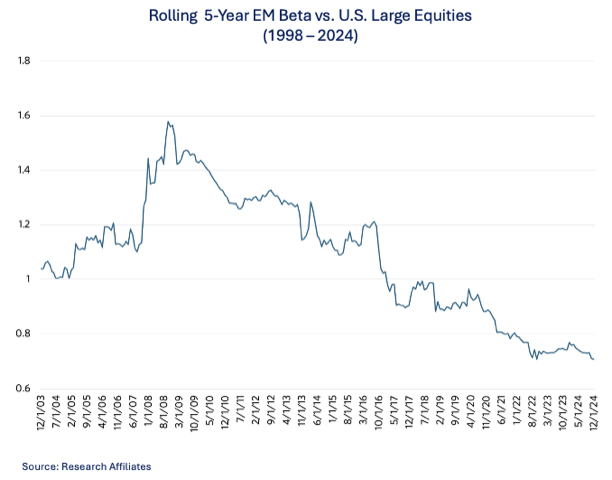
Investing in Indonesia provides significant diversification benefits, particularly in the context of an expensive and concentrated U.S. equity market. Contrary to conventional wisdom, emerging markets like Indonesia do not exhibit beta coefficients consistently above 1 relative to the U.S. market. As a result, they are less correlated with major global indices and can help reduce overall portfolio volatility.
Conclusion
The recent decline in the Indonesian market is primarily driven by external factors and short-term uncertainties. However, strong economic fundamentals, attractive valuations, and long-term growth prospects make Indonesia an appealing investment opportunity for those looking to diversify their portfolio and capitalize on the potential of emerging markets.
Periods of market stress often present the best buying opportunities. For those who can withstand short-term volatility, increasing exposure to Indonesia at current levels could lead to significant long-term returns. As portfolio managers, we are actively increasing our equity positions in Indonesia, confident that, in the end, the market will reward patience, conviction, discipline, and diversification.
Follow us on LinkedIn
This is a marketing communication intended exclusively for institutional investors.
Please consult the Fund Prospectuses and KIDs before making any investment decisions.
Back


Sildenafil Onset vs Duration
Sildenafil Onset vs Duration