


A Park or Tejero Moment for South Korea
In 1972, South Korea’s President Park Chung Hee declared martial law after carrying out a self-coup, ushering in 15 years of authoritarian rule. During this period dissent was suppressed, and media and expressions of art were completely controlled.
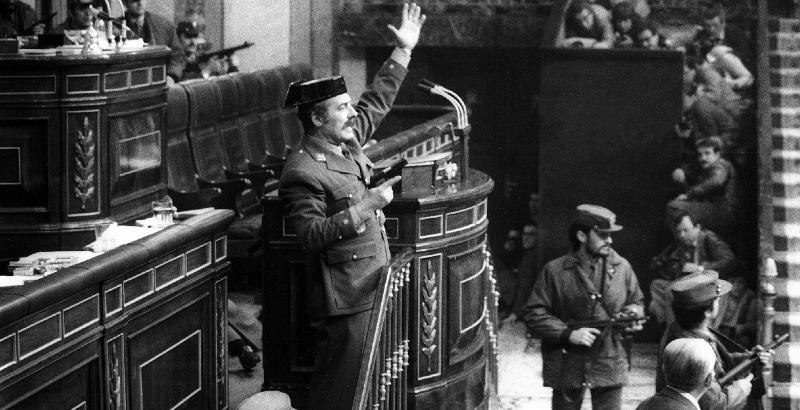
Fast forward a few years to February 1981, approximately 10,000 kilometres away, Lieutenant Colonel Antonio Tejero (pictured above) led an armed assault on Spain’s Congress of Deputies during a parliamentary session to elect a new prime minister. Unlike Park, Tejero’s coup attempt failed. Spain’s King Juan Carlos I decisively backed the democratic government, ordering the military to stand down. This pivotal moment solidified Spain’s commitment to democracy and paved the way for significant modernization, including robust economic growth under the Socialist Party’s leadership.
Which Scenario Fits South Korea Today?
Could South Korea’s current crisis resemble Park’s successful or Tejero’s failed attempt to derail democracy?
The unfolding events suggest a scenario much closer to the latter.
Recent reports indicate that President Yoon’s attempted coup was not merely a whim of an eccentric leader and a small, loony circle. Instead, it reflects the nostalgic sentiment towards authoritarianism of part of the conservative party, particularly the older generation (a minority, not only among the population but also among the conservative party, as clearly demonstrated by the bipartisan vote to lift the martial law during last week’s dramatic hours).
The coup’s key accomplices have been arrested, and while President Yoon remains for the moment formally in charge, his prerogatives have been transferred to his party. Parliament is set to vote another impeachment motion on Saturday, with signs suggesting the motion could secure the required majority this second time.
The Path Forward
According to the Korea Times (see here ) should this second impeachment motion pass, President Yoon’s powers would be temporarily held by Prime Minister Han and new presidential elections would likely occur within a few months.
In this scenario, the centre-left (Democratic Party) would control the Presidency, the Parliament, and the Constitutional Court, and this would lead to:
-
Stability and Governability:
The political gridlock between President Yoon’s PPP and a Democratic Party-controlled Parliament would end, restoring a sense of normalcy. A new Constitution could be approved, providing a more modern and less divisive political governance for the nation.
-
Improved Relations with North Korea:
A less confrontational approach could replace the current administration’s hardline stance, fostering opportunities for dialogue and potential rapprochement.
Such political stability could represent a turning point for South Korea’s underperforming domestic market, particularly for sectors and companies sensitive to North-South relations and increased domestic demand.
Conclusion
While uncertainty and fear dominate the current atmosphere, opportunities often lie in such moments of flux. As Warren Buffett famously advised, “Be fearful when others are greedy and greedy when others are fearful.” With South Korea potentially on the cusp of significant political and economic transformation, investors would do well to pay close attention to how these events unfold.
Follow us on LinkedIn
This is a marketing communication intended exclusively for institutional investors. Refer to the Fund Prospectus & KID before making any investment decision.
Back

